 العربية
The Washington–Tehran Memorandum of Understanding: What Comes After 60 Days?
Although the understanding reduces the likelihood of direct confrontation between Washington and Tehran in the short term, it does not necessarily establish the fundamental pillars of a stable regional order. Instead, it may contribute to the gradual erosion of U.S. deterrence, particularly as it reinforces the perception that Iran has been able to withstand pressure and impose its own terms under the Memorandum of Understanding, contrary to the discourse of concessions and dictates that had been promoted since the first round of negotiations in Muscat in mid-April 2025.
by STRATEGIECS Team
- Release Date – Jun 28, 2026
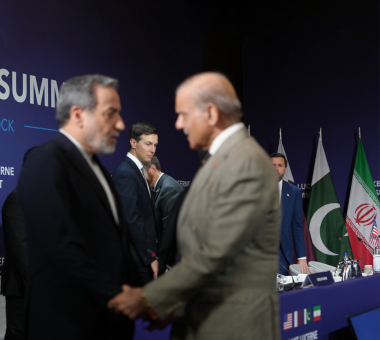
The United States and Iran announced on June 14, 2026, that they had reached a Memorandum of Understanding to end the war and enter into a negotiating track lasting up to 60 days in order to reach a final agreement. The memorandum was signed virtually and entered into force on June 17, after being signed by U.S. President Donald Trump and Iranian President Masoud Pezeshkian. While the memorandum is viewed as an alternative to continued escalation or renewed direct military confrontation, its early indicators do not point to a positive impact on the regional security landscape. Rather, it may open the way for a new wave of instability, amid expectations of opposition from some of Washington’s regional allies, especially Israel, similar to what occurred with the 2015 agreement.
The Memorandum of Understanding: Terms and Context
The Memorandum of Understanding signed by the United States and Iran consists of 14 provisions. It provides for the immediate cessation of military operations across all fronts and commits both parties to reaching a final agreement within a maximum period of 60 days, with the possibility of an extension. It also requires Iran to guarantee the safe passage of commercial vessels through the Strait of Hormuz and refrain from imposing transit fees until a final agreement is reached, in exchange for the United States lifting its blockade of Iran’s coastlines along the Arabian Sea and the Arabian Gulf within 30 days of the memorandum’s signing.
The memorandum also includes immediate and long-term U.S. commitments. Among the immediate measures are granting Iran waivers to resume exports of crude oil and petroleum products upon the memorandum’s signing, as well as releasing Iranian frozen funds and assets once its provisions begin to be implemented.
In the longer term, Washington committed to supporting Iran’s reconstruction and economic development with no less than $300 billion in funding, while lifting all sanctions imposed on Iran, including those established under United Nations Security Council resolutions, resolutions of the Board of Governors of the International Atomic Energy Agency, and all unilateral U.S. sanctions, both primary and secondary.
In return, Iran affirmed that it would neither seek nor develop nuclear weapons and would maintain the status quo of its nuclear facilities and program until a final agreement is reached. Should such an agreement be concluded, it would be adopted through a binding resolution issued by the United Nations Security Council.
.jpg)
The memorandum was signed approximately 68 days after the fragile ceasefire entered into force on April 7, 2026. Although both parties engaged in the Islamabad negotiating rounds beginning on April 11, the ceasefire—which was initially set to last for two weeks before being extended—was marked by multiple violations.
Iran continued its military activities against commercial shipping in the Strait of Hormuz, including an attack on a cargo vessel operated by South Korea’s HMM in the Arabian Gulf in early May, followed by an attack on an oil tanker transiting the Strait of Hormuz on May 4. On June 10, the Revolutionary Guard and the Khatam al-Anbiya Headquarters officially announced the closure of the Strait of Hormuz “to all vessels.” Iran also continued its hostile actions against neighboring states.
In response, the United States maintained limited military strikes and introduced measures to safeguard maritime navigation through the strait. In late May, U.S. President Donald Trump announced the launch of Operation Project Freedom, aimed at escorting and guiding vessels through the Strait of Hormuz, alongside the imposition of a naval blockade on Iranian ports overlooking the Arabian Sea and the Arabian Gulf.
The Memorandum of Understanding Through the Lens of Immediate Priorities
The Memorandum of Understanding between the United States and Iran is not the product of a fundamental shift in bilateral relations, nor does it resolve the core disputes between the two countries. Rather, it is primarily designed to serve the immediate domestic political priorities of both sides.
For the United States, the agreement offers an opportunity for President Donald Trump’s administration to demonstrate a major diplomatic achievement without becoming entangled in a large-scale military conflict in the Middle East. Trump was quick to compare the Memorandum of Understanding to the agreement concluded by the administration of former U.S. President Barack Obama in 2015, from which Trump withdrew during his first term in 2018.
In practice, there is little public appetite in the United States for continued military involvement in the region. An agreement that promises to promote stability, safeguard freedom of navigation, and avoid another war carries greater political value than a prolonged military campaign.
One indication of this was the U.S. Senate’s passage, on June 24, of a non-binding resolution calling for an end to U.S. military operations against Iran by a vote of 50 to 48, following its earlier passage by the House of Representatives. At the same time, Trump has argued that sustained non-military pressure on Iran compelled Tehran to enter negotiations from a position of weakness.
For Iran, the surrounding risks appear both to be escalating and to be fully recognized by the regime, particularly given the immense pressure on its economy and its need for financial support and investment to reinforce domestic stability. As a result, the agreement is viewed in Tehran as both an economic and political opportunity. At the same time, Iran will seek to project domestically and regionally that the Memorandum of Understanding demonstrates the regime’s success in withstanding pressure from the United States and Israel while preserving its core capabilities and compelling Washington to reach an understanding.
From another perspective, Tehran views the agreement as serving a broader regional objective. Amid growing indications that a deal was imminent—particularly following Trump’s repeated announcements—Iran sought to restore its severely weakened “The Unification of the Arenas” strategy through the equation of “Dahiyeh for the North,” under which any Israeli strike on Beirut’s Dahiyeh would be met by an Iranian response targeting northern Israel. Iran applied this equation on June 8, 2026, when it launched two waves of missiles against multiple locations in Israel just hours after Israel struck Beirut’s Dahiyeh.
In practice, Tehran is attempting to create the impression that the strategic environment should move beyond the June 2025 and February 2026 wars and return to the previous rules of engagement. This includes the pattern of limited Iranian retaliation against Israeli operations in Syria and Lebanon, such as Iran’s April 13, 2024, attack following Israel’s strike on its consulate in Damascus, and its attack in early October 2024 in response to the assassination of Hassan Nasrallah on September 27.
.jpg)
Accordingly, Iran presents the agreement as evidence that the so-called “Axis of Resistance” and the “Unification of the Arenas” strategy have withstood intense U.S.-Israeli political and military pressure. In Lebanon, the agreement is interpreted by Hezbollah and its popular support base as strengthening the group’s political and military position, particularly in the face of the Tripartite Framework Agreement between the United States, Israel, and Lebanon, signed on June 25, 2026.
That agreement establishes a set of phased security arrangements intended ultimately to lead to Hezbollah’s disarmament, while at the same time preserving Israel’s freedom of military action against perceived threats or in response to attacks. This prompted Hezbollah to reject the agreement, describing it as “non-existent.”
Beyond the Memorandum of Understanding: Sixty Days of Open-Ended Scenarios
Although the agreement reduces the likelihood of direct confrontation between Washington and Tehran in the short term, it does not necessarily lay the foundations for a stable regional order. On the contrary, it may contribute to the gradual erosion of U.S. deterrence, particularly as it reinforces the perception that Iran has been able to withstand pressure and shape the terms of the Memorandum of Understanding, contrary to the discourse of concessions and dictates that had been promoted since the first round of negotiations in Muscat in mid-April 2025. Nevertheless, the signed Memorandum of Understanding presents two possible scenarios.
First scenario: The region may experience periods of tactical stability alongside continued strategic instability, leaving many of the conditions that have fueled conflict and extremism for decades unresolved. Early indicators of this scenario are already evident. Iran has continued targeting neighboring states even after signing the Memorandum of Understanding. On June 26, Iran attacked a vessel using a drone, just hours after the Revolutionary Guard warned ships against sailing outside the routes designated by Tehran. This prompted the U.S. Central Command to respond with strikes on military sites inside Iran and around the Strait of Hormuz. On June 28, both Kuwait and Bahrain were subjected to Iranian missile and drone attacks that caused material damage.
In light of these developments, diplomatic negotiations between Washington and Tehran are likely to continue in parallel with intermittent military confrontations until a final agreement is reached—if one is reached at all. Conversely, continued Iranian attacks, coupled with growing Israeli concerns over the recent outcomes of the agreement and the failure of diplomatic progress to produce an improvement in Iran’s good-neighborly relations with Arab and Gulf states, are likely to encourage Tehran to intensify its pressure in an effort to impose its own terms and establish a new regional equation and new maritime security arrangements. Simultaneously, these developments reinforce the perception that sustained U.S. military pressure on Iran remains an indispensable instrument for maintaining deterrence.
Second scenario: The immediate gains sought by both the United States and Iran over the short and medium term—foremost among them avoiding a return to military conflict—could encourage the conclusion of a final agreement within 60 days or beyond. This appears particularly plausible given that the Memorandum of Understanding confines negotiations to Iran’s nuclear program, excluding other contentious issues such as Iran’s ballistic missile program.
This is especially significant following Trump’s statement on June 17, 2026, that he understood Iran’s possession of ballistic missiles so long as other countries possessed them as well. In this context, the central question is not whether the agreement can endure from a technical standpoint, but whether it will continue to serve the political and economic interests of both parties. For Trump, the agreement provides an opportunity to present a diplomatic achievement while avoiding involvement in a prolonged war. For Iran, it offers access to financial inflows and economic benefits that help sustain regime stability while preserving its narrative of resilience and victory.
Nevertheless, over the longer term, such an outcome could reinforce the perception among regional states—particularly Washington’s strategic partners, including Israel—that U.S. influence in the Middle East is declining. This perception has been reinforced by increasingly public disagreements between Washington and Tel Aviv, reflected in statements by political leaders and senior officials.
In this regard, the context of the Memorandum of Understanding, together with Iran’s continued attacks despite repeated U.S. deterrent threats, raises questions about Washington’s willingness or ability to impose its will. From this perspective, even if a final agreement is reached, it may not be interpreted as a demonstration of American strength but rather as a reflection of Washington’s preference to avoid the risks associated with prolonged military operations or extended negotiations.
Moreover, it would fail to address the ideological, political, and security drivers underpinning the Iranian-aligned regional axis. This would run contrary to expectations that the circumstances were conducive to reaching a comprehensive agreement that would secure meaningful Iranian concessions on three key issues: the nuclear program, the ballistic missile program, and its support for regional proxies.

STRATEGIECS Team
Policy Analysis Team