 العربية
The Islamabad Negotiations: Between the Conflict of Wills and Rules of Engagement
With the conclusion of the negotiations held in Islamabad on April 11–12, both the United States and Iran moved toward addressing their major outstanding issues through communication channels led by Pakistan. Nevertheless, the core disputes surrounding the negotiations remain unresolved, whether regarding the nuclear and missile programs on the one hand, or Iran’s destabilizing regional behavior and its support for proxy groups on the other.
by STRATEGIECS Team
- Release Date – May 12, 2026
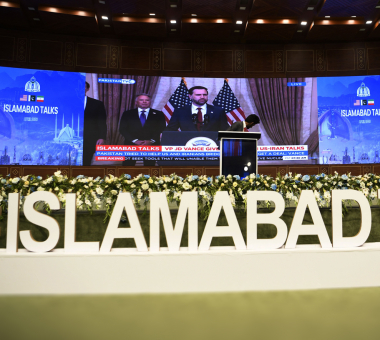
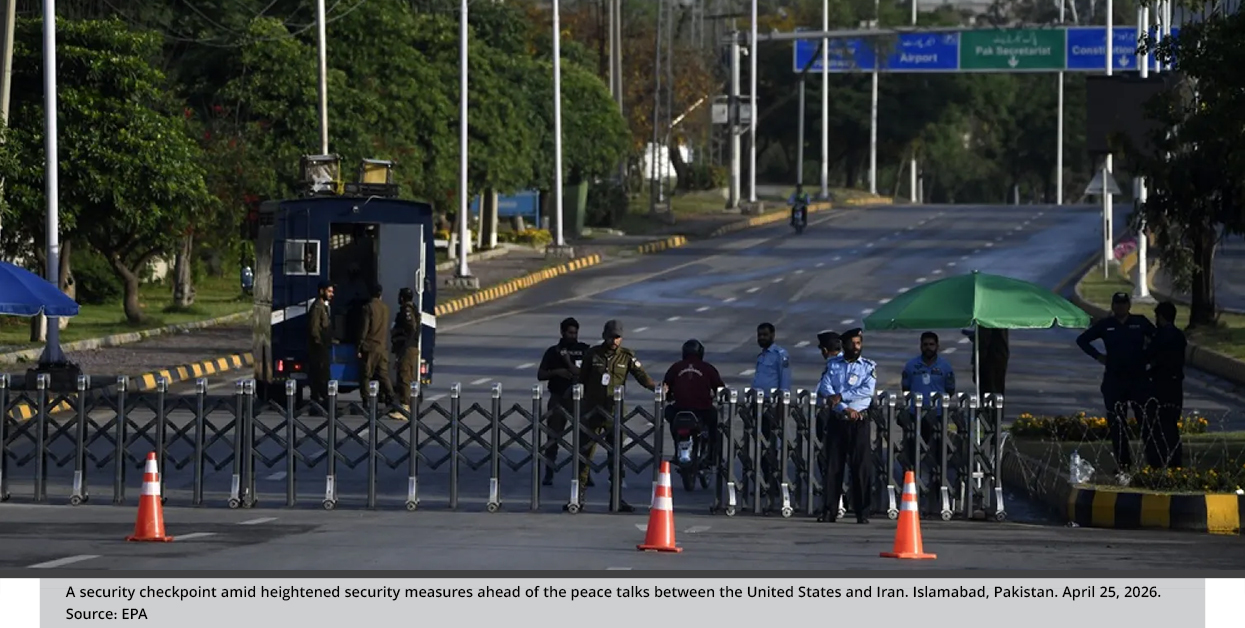
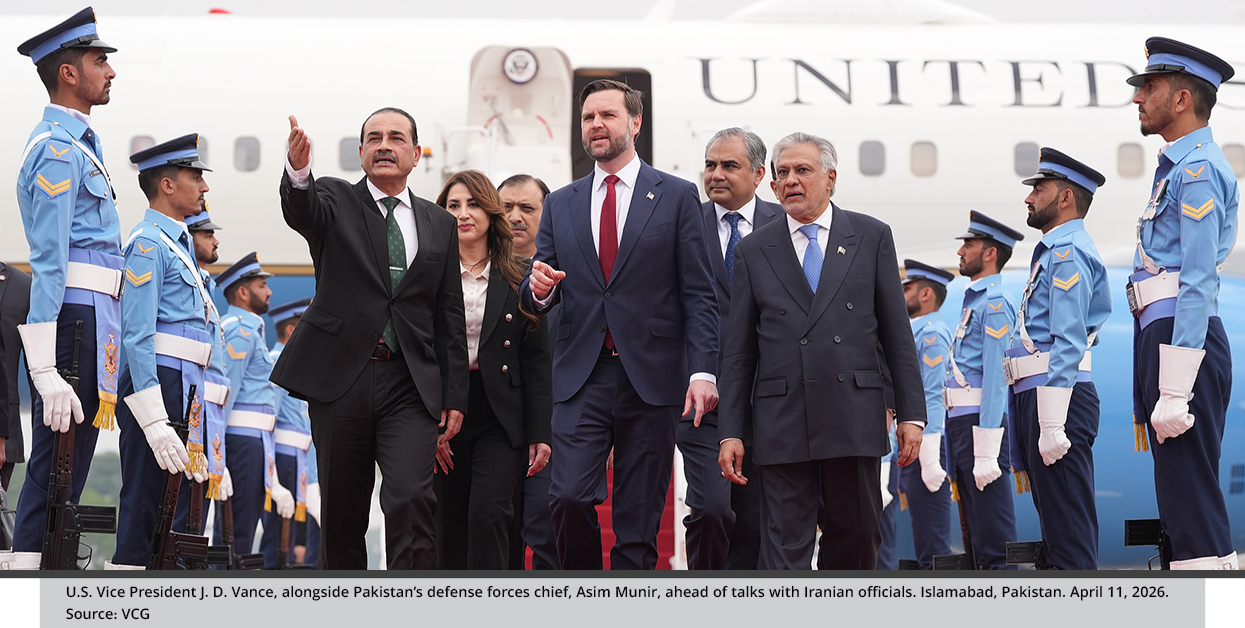
The round of direct negotiations between the United States and Iran in Islamabad on April 11–12, 2026, faltered, as it failed to produce either an agreement that could end the war or clarity regarding the fate of the ceasefire announced on April 7 for a two-week period and later implicitly extended. Nevertheless, reaching an agreement between the two sides was not expected to occur so quickly, given the depth of the disagreements between them. The two rounds of negotiations in Islamabad were therefore limited to paving the way for a future package of negotiations, additional rounds of talks, and the exchange of messages through Pakistan.
The prospects for reaching an agreement depend first on the ability of both states to reach a preliminary understanding regarding the framework and nature of the negotiations, and subsequently on their willingness to make undesirable concessions, as well as on their capacity to manage the more complex issues with caution while simultaneously taking into account the domestic political considerations of each side. In general, the negotiations face four major, interconnected, and highly complex challenges: the longstanding ideological hostility and mutual distrust between the United States and Iran; the nature and structure of the negotiations, whose course is largely dominated by American demands; Iran’s limited ability to make concessions on its core positions, particularly amid internal divisions; and the influential role of Israel in shaping the trajectory of the negotiation process.
The Geopolitical Rivalry and Mutual Distrust
The dilemma of the Islamabad negotiations lies in the collision between a Western approach that views Iran as a source of instability and a revolutionary Iranian ideology that regards hostility toward the United States as a pillar of the regime’s legitimacy. Moreover, Iran’s ideological considerations often take precedence over pragmatic interests. This contradiction further extends to broader geopolitical issues: while the United States is considered the principal actor within the existing international order, Iran aligns itself with “revisionist states” that oppose the current international system founded on capitalist norms, particularly with the countries of the Eastern axis like Russia and China. This pattern of alignment contributes to escalating tensions with the United States, as the conflict moves beyond the scope of bilateral disputes into a broader arena shaped by international alignments and global power balances.
In this context, both indirect and direct diplomatic interactions within the Islamabad negotiation framework remain limited in their ability to produce breakthroughs on the deeper underlying issues and contradictions. More often than not, these interactions are interpreted through a lens of suspicion shaped and reinforced by a long history of mutual distrust.
On the one hand, Iran fears Washington’s tendency to act unilaterally. Wendy R. Sherman, who led the American team during the 2015 Iranian nuclear agreement negotiations, noted that Iranian diplomats were skeptical about the durability of any agreement with the United States, arguing that Washington could withdraw at any moment without regard for its commitments. This concern —considered existential for Iran—was later confirmed when the first Trump administration withdrew from the nuclear agreement in 2018.
From Iran’s perspective, the central question is why it should make concessions affecting its sovereignty and independence without reliable guarantees that the United States will uphold its commitments. In 2018, the five permanent members of the United Nations Security Council and Germany were unable to prevent the United States from withdrawing from the agreement.
Conversely, the United States appears fully aware of the possibility of Iranian maneuvering through diplomacy, as Tehran often employs negotiations as a tactical instrument to buy time, defer the crisis. It also seeks to prevent the conditions that could lead to a return to war, and wager on internal American variables—particularly the reduction of the U.S. military presence and momentum in the region surrounding Iran. Additionally, Tehran appears to be anticipating the launch of campaign activities for the U.S. congressional midterm elections scheduled for November 2026.
Accordingly, the prospects for reaching an agreement in the short term appear limited. This is especially true given that the negotiations were launched under the pressure imposed by the two-week ceasefire, an extremely narrow timeframe that makes it difficult to secure either a comprehensive agreement to end the war or even a temporary arrangement to extend the truce. Although the United States and Israel launched two military operations against Iran during the recent period—in June 2025 and then February 2026—Tehran continues to view negotiations as a venue for reaching compromise solutions, in contrast to the American insistence that Iran adhere to the 15-point proposal presented to it. The United States demands the complete dismantlement of Iran’s nuclear infrastructure and the imposition of quantitative and qualitative restrictions on its ballistic missile program. Tehran, however, views these demands as an attempt to weaken its deterrence capabilities and leave it permanently vulnerable to external threats. Consequently, it refuses to offer substantial concessions, while limiting its own demands to sanctions relief and an end to the American naval blockade imposed on its ports and coastlines overlooking the Arabian Sea.
The Dominance of the U.S. Demands over the Course of the Negotiations
The American strategy toward the ongoing negotiation process is centered on what may be described as “negotiations through strength,” based on the assumption that Iran has been exhausted in the aftermath of the war and no longer possesses the strong bargaining leverage it once had. According to this view, the consequences of the recent war and the assassination of several senior figures within the Iranian regime, most notably Supreme Leader Ali Khamenei, would push the regime toward breaking under pressure and making concessions through coercion.
Accordingly, the United States proposed a 15-point draft that called for the termination of Iran’s nuclear program, restrictions on its missile program, and an end to its support for regional proxies—demands that Iran argues exceed the limits of what is acceptable to it. Despite the loss of leadership figures and threats to strike energy and electricity infrastructure, Tehran has shown no signs of making concessions, as doing so would carry equally serious repercussions related to the regime’s loss of legitimacy and its internal narrative.
Moreover, the current Iranian approach appears detached from political realism, particularly in its handling of both internal and external developments and the new balance of power imposed by the United States and Israel. Iran is now negotiating after having lost much of the strength of its regional proxies, its principal nuclear facilities, and a significant portion of its missile arsenal. Nevertheless, Tehran continues to advocate for a model of “political settlement” similar to the negotiations that led to the Joint Comprehensive Plan of Action (JCPOA) in 2015 during the administration of former U.S. President Barack Obama.
These transformations, however, play a central role in explaining the differences between the approaches of the two American administrations regarding the form and nature of negotiations. The earlier negotiations revolved around a single equation: restricting Iran’s nuclear program in exchange for sanctions relief. In contrast, the current negotiations extend far beyond the nuclear issue to encompass broader and more complex files and demands, as Washington seeks to impose a new equation that reflects the realities of the military balance and battlefield outcomes in shaping the negotiating process and its results.
In fact, this equation and the approach of “negotiation through strength” have historically proven successful, particularly in post-war periods. Nevertheless, applying this approach to the Iranian case faces a range of complexities that render the prospects of achieving tangible results highly uncertain.This is reflected in Iran’s internal dynamics, which suggest that Iran has emerged more hardline after every attack and pressure tactic applied against it. This became evident in the aftermath of the economic sanctions imposed in 2006, following Washington’s withdrawal from the Joint Comprehensive Plan of Action (JCPOA) in 2018 and the first Trump administration’s “maximum pressure” campaign, as well as after the Israeli military operation “Rising Lion” and the U.S. operation “Rising Lion” and the U.S. operation “Midnight Hammer” in June 2025.
Despite Washington’s imposition of economic sanctions on Iran in 2005 over its nuclear program, the results proved counterproductive. Iran intensified its nuclear activities on an unprecedented scale, and the number of centrifuges at the Natanz facility increased from 164 in 2005 to nearly 19,000 by 2013.
When these realities are examined in light of the current situation, part of the negotiations’ deadlock can be attributed to Washington’s demand that Iran transfer its stockpile of highly enriched uranium to a third party—something Tehran considers an unrealistic demand. The Iranian political, military, and religious elite collectively reject such a concession, thereby leaving the Iranian negotiating team with very limited room to maneuver in offering any related compromises.
Iran has instead proposed an alternative based on limiting uranium enrichment to non-military uses at an enrichment level of 3.7%, while allowing the International Atomic Energy Agency to monitor its nuclear facilities. However, the U.S. administration rejects this proposal, as it had already been implemented under the 2015 agreement from which Washington withdrew in 2018, while U.S. President Donald Trump criticized his predecessor, Barack Obama, for accepting it.
On the other hand, the United States appears to be managing the negotiations through a zero-sum approach, based on imposing conditions, issuing demands, and anticipating Iran’s retreat and concessions. As it is not seeking compromise solutions but rather the fulfillment of its demands. Consequently, Washington has rejected all Iranian proposals, including those involving Iranian concessions beyond the framework of the 2015 agreement, particularly regarding its nuclear program. The latest instance of such rejection came when Trump dismissed Iran’s response to his proposal on May 10. According to The Wall Street Journal, Tehran proposed reducing the enrichment level of part of its uranium stockpile, transferring the remainder to a third country, and suspending uranium enrichment for less than 20 years.
However, “negotiation through strength” is not a one-dimensional approach concerned solely with the use of power; it also involves a parallel dimension related to the opportunities and incentives offered to Iran in exchange for its concessions. Among the fifteen American demands, Washington has offered Tehran the lifting of sanctions and its reintegration into the international economy—issues that are of considerable importance to Iran given their implications for the country’s worsening economic crisis and the public discontent that existed prior to the war.
While Washington employs pressure to break Iranian intransigence, it also signals gestures of goodwill whenever it perceives or anticipates the possibility of Tehran agreeing to American demands. The latest example of this was the announcement by Trump of a temporary suspension of “Project Freedom,” an operation aimed at escorting commercial vessels and facilitating their passage out of the Strait of Hormuz. The move appeared to serve as a signal intended to encourage Iran to respond with a proposal more compatible with Washington’s demands—which ultimately did not occur.
Shifts in the Internal Balance of Power in Iran
The war led to shifts in the dynamics of power, influence, and decision-making—particularly strategic decision-making—within Iran, in addition to changes in the nature of the relationship between the regime and society, as well as with segments of reformist leaders and politicians. Prior to the war, the Iranian regime had been facing continuous waves of protests from 2009 until early 2026. Economic pressures, the regime’s security-oriented approach, the suppression of dissenting voices, and the repercussions of proxy wars all contributed to the decline in its popularity and its gradual movement toward collapse.
The revolutionary concepts of the 1980s and the moderate reformism of the 1990s were slowly giving way to a younger, more modernist generation seeking economic empowerment and greater access to the world. These ideas and principles drove university students to protest in Tehran in 2009 as part of what became known as the “Green Movement.” The protests continued to re-emerge over time in different forms, with varying demands and motivations—most of them economic in nature—and with increasingly broader social participation on each occasion, culminating in the recent protests earlier this year, which constituted an unprecedented event in terms of their scale, intensity, and persistence.
For many experts, these protests represented a genuine threat to the Iranian regime before the United States and Israel became involved in the protest movement, a development that contributed to isolating the demonstrations and heightened fears regarding security infiltration. This eventually coincided with the outbreak of war, that The Islamic Revolutionary Guard Corps (IRGC) and the Iranian regime came to believe revived nationalist momentum and anti-American and anti-Israeli sentiment within the Iranian street.
In this context, the Iranian regime believes that despite the losses it sustained during the war, it gained an added advantage in the form of renewed popular support. This support intersected with a narrative that the regime has promoted since its establishment—namely hostility toward the United States and Israel. Consequently, the regime entered and managed the negotiations in a manner aimed at consolidating and benefiting from that support. The IRGC, alongside the religious establishment, viewed this as an opportunity to unify the public. One outcome of this process was the selection of Mojtaba Khamenei as the country’s third Supreme Leader. Despite the limitations of his religious credentials, his selection was intended to preserve and emphasize the revolutionary character of the regime. Such developments may push the regime toward an even stronger adherence to its rhetoric and narrative.
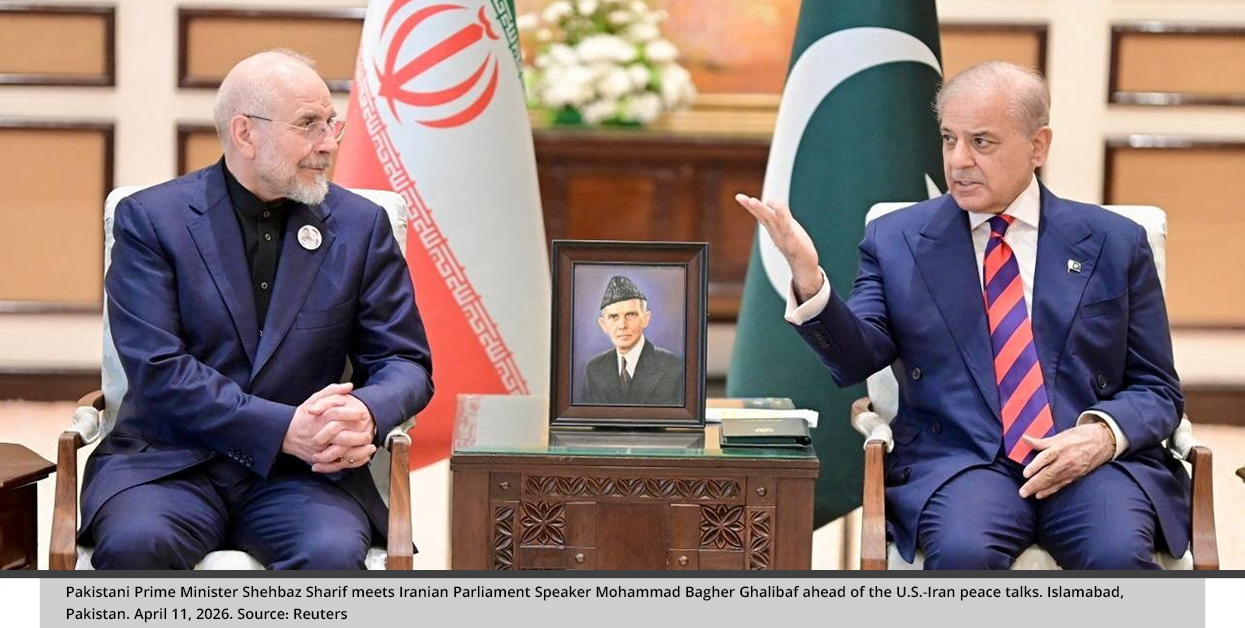
In light of these complex dynamics, the negotiating team led by Mohammad Bagher Ghalibaf and Abbas Araghchi was unable to offer concessions that could expose them to criticism or make them appear weak in the eyes of both the religious leadership and public opinion, particularly given Trump’s tendency to portray any Iranian concession as a form of surrender rather than allowing the regime space to save face.
Indeed, the negotiating team and the broader political leadership in Iran faced criticism on several occasions. For example, Saeed Jalili, a former nuclear negotiator and prominent Iranian security official, called for clarification from Mojtaba Khamenei regarding whether the negotiating team was acting under his direct guidance, thereby raising questions about the credibility of the negotiators themselves.
Another question has also emerged among segments of the Iranian elite regarding why Washington and Tel Aviv appeared to grant both Mohammad Bagher Ghalibaf and Abbas Araghchi temporary immunity from targeting. This has fueled accusations that they may be part of a broader conspiracy against the regime, extending even to President Masoud Pezeshkian, who had previously apologized for attacks against Arab partners, while the IRGC quickly reaffirmed that it “retains the right to attack Arab states.”
Naturally, these examples lead us to another issue of no less complexity, one related to broader shifts within the Iranian regime itself—from the struggle between reformists and conservatives to conflicts among state institutions, particularly between the IRGC, which remains closer to the line of former Supreme Leader Ali Khamenei, and the presidency and parliament, which are more inclined to warn against the consequences of war and the costs of sanctions on both the regime and the state.
This contradiction and institutional rivalry was again reflected in an incident involving a post by Foreign Minister Abbas Araghchi announcing the reopening of the Strait of Hormuz, which provoked a response from the IRGC, asserting that the matter fell under its authority rather than that of the Foreign Ministry.
Accordingly, the prospects for reaching an agreement remain contingent upon resolving the “struggle of power” within the structure of the Iranian regime itself, particularly between political elites with reformist inclinations and experience in managing negotiations—whose intellectual and political references trace back to reformist figures such as former President Hassan Rouhani and Mohammad Javad Zarif, both of whom reports suggest are under house arrest—and a new generation of IRGC commanders seeking to dominate both the political scene and the decision-making process. This latter group is generally more hardline and less familiar with the mechanisms of international diplomacy or the complexities of state administration and economic management.
Under such circumstances, recalibrating the internal balance of power appears difficult, particularly amid the ambiguity surrounding the third Supreme Leader. At the same time, the possibility remains that a renewed war or intensified pressure on Iran could pave the way for the emergence of a new Iranian leadership more aware of the magnitude of the ongoing political transformations.
Israel’s Influential Role in Shaping the Course of the Negotiation Process
The negotiation process is closely tied to and influenced by Israeli-American coordination regarding its outcomes, as Israel fears any agreement that does not fully resolve the Iranian nuclear issue, similar to the 2015 agreement, which it openly and explicitly opposed. Israel is also concerned that lifting sanctions and releasing Iran’s frozen financial assets would enable Tehran to rebuild its proxy networks, foremost among them Hezbollah. Consequently, Israel follows the negotiations step by step and signals the paths it considers potentially harmful to its strategic interests.
Following the October attacks, which Israel claims involved a central and active Iranian role, the direct confrontations between the two states in April and October 2024, then the Twelve-Day War in June 2025, and finally the Forty-Day War in February 2026, Israel has increasingly focused on including Iran’s missile program within the negotiations as a major issue equivalent to the nuclear program. This is particularly because the missile program demonstrated Iran’s ability to reach and strike Israel directly, whereas Tehran had previously relied on proxy actors for such actions throughout past decades.
In addition to the close coordination between Israel and the United States as direct parties to the war, there also exists an American political elite that shares Israel’s perceptions regarding the risks associated with Iran, particularly within the U.S. administration and Congress. Among them is Senator Lindsey Graham, who repeatedly called for the overthrow of the Iranian regime and, during the war, demanded that this objective be formally adopted as a strategic goal of Washington.
Moreover, Israel directly intervened in the course of the negotiations following Pakistani Prime Minister Shehbaz Sharif’s announcement that Lebanon would be included in the American-Iranian truce, a move Israel opposed on the grounds that the Lebanese arena and its developments were separate from the Iranian arena. Although the ceasefire in Lebanon entered into force on 16 April 2026, it remained fragile—and perhaps largely symbolic—amid the continuation of military operations between Israel and Hezbollah.
In reality, Israel’s tools for influencing the negotiations are not limited to coordination frameworks and pressure on Washington alone; it has previously played a direct role in obstructing negotiations. Israel launched “Operation Rising Lion” two days before the second round of the “semi-direct talks”, sponsored by Oman, which had been scheduled for 15 June 2025. The United States later intervened in that military operation by targeting Iran’s principal nuclear facilities in Natanz, Isfahan, and Fordow on 22 June.
Finally, following the conclusion of the Islamabad negotiations round, both the United States and Iran shifted toward addressing their principal disputes through communication channels led by Pakistan. Nevertheless, the core issues surrounding the negotiations remain unresolved, whether concerning Iran’s nuclear and missile programs on the one hand, or its destabilizing regional behavior and support for proxy groups on the other.In general, the negotiations now stand before several possible future scenarios:
1- Breakdown of Negotiations and Renewed War Under the Principle of “Negotiations Through Strength”: Under this scenario, Washington would seek, through the resumption of military operations, to compel Iran to offer broader concessions in future rounds of negotiations. if this scenario materialize, military operations could take several forms:
- Expanding the scope of targeting to include Iran’s vital infrastructure, such as energy resources and power-generation facilities.
- Conducting limited surgical operations, including the full control of the Strait of Hormuz, in order to deprive Iran of what is currently considered its last and only major bargaining leverage for pressuring both the global economy and the United States.
- Resuming military operations at a pace similar to previous campaigns, using continued military pressure as a sustained pressure instrument while further degrading Iran’s military capabilities and targeting its military leadership.
This scenario is reinforced by Washington’s timetable, as the negotiations appear to have been granted a final opportunity until Trump concludes his anticipated visit to China between 13–15 May 2026. This date is viewed as a critical turning point after which a return to the military option becomes increasingly likely if the negotiations fail to achieve a meaningful breakthrough.
2- Emergence of New Mediating States Instead of Pakistan: This scenario focuses on the decline in American confidence in Pakistan’s mediating role, alongside indications that Islamabad is managing the negotiations according to complex calculations, thereby opening the door for the emergence of new international mediators to oversee the negotiation process. On the one hand, Pakistan faces internal constraints due to the presence of domestic actors with overlapping interests with Iran, whether among Shiite groups sympathetic to Tehran or armed groups opposed to it and operating within Pakistani territory. This makes any official Pakistani position vulnerable to internal polarization.
On the other hand, recurring reports point to growing American suspicions—particularly within circles close to the current U.S. administration’s approach—regarding Pakistan’s role as a mediator perceived to be biased toward Iran. Fox News published a report concerning ties between prominent Pakistani military leaders and the IRGC, while CBC News, citing American officials, reported that Pakistan had protected Iranian military assets, including aircraft, within its territory. Although Islamabad officially denied these allegations, they may nevertheless be interpreted as indicators of declining American trust in the negotiation track led by Pakistan.
3- Successful Negotiations and the End of the War: This scenario assumes that the success of the negotiation process constitutes a strategic necessity for both parties. On the one hand, Washington recognizes that continued escalation and pressure could produce counterproductive outcomes. The unprecedented pressure imposed on the Iranian regime and the extensive damage inflicted upon the country’s infrastructure could either push Iran into political vacuum and chaos or drive the regime toward radical hardline positions and possibly even suicidal choices, given that it perceives the conflict as existential.
On the other hand, the United States may conclude that the time has come to replace military threats with economic incentives, which could strengthen pragmatic tendencies within the Iranian system at the expense of the more hardline discourse promoted by IRGC.
4- Intensifying Alternative Pressure and Long-Term Attrition: Intelligence and analytical assessments conducted over the past two weeks suggest that the strategy of economic pressure and long-term attrition remains generally precise and stable. Trump appears convinced that economic pressure can compel Iran to make a decision regarding an agreement. Even if no agreement is ultimately reached, the blockade itself contributes to weakening the Iranian regime to a degree that could eventually lead to its collapse.
This approach also aligns with public opinion trends in the United States, which largely favor avoiding war, as well as with Trump’s own statements emphasizing his attempts to avoid returning to military conflict whenever possible. Although Iran used limited force several days ago to signal that it was not operating under pressure, it has become increasingly evident that its domestic situation has grown difficult as a result of the blockade.
This dynamic also intersects with the efforts of Israeli Prime Minister Benjamin Netanyahu to secure political gains ahead of upcoming elections. Simultaneously, Israel is actively seeking to organize a summit in Washington involving Lebanon and Syria, and possibly Gulf states, within the framework of proposing a broader concept of regional developmental and economic cooperation.
STRATEGIECS Team
Policy Analysis Team