 العربية
The Losing Bet on Restricting Arms in Iraq: The Positions of Armed Factions and Their Complex Motives
The Iraqi government’s plan to restrict arms to the state faces significant challenges due to the complexity of the political and security landscape. The government seeks to end the phenomenon of uncontrolled weapons by September 2026, but the positions of armed factions continue to vary between acceptance and rejection. Some factions’ rejection is linked to internal and external factors, including Iranian influence, tensions with the United States, and developments in Syria, in addition to their extensive political, military, and economic influence. The implementation of the plan is likely to continue to be delayed due to the issue’s connection to political balances within Iraq and regional and international influences.
by STRATEGIECS Team
- Release Date – Aug 11, 2026
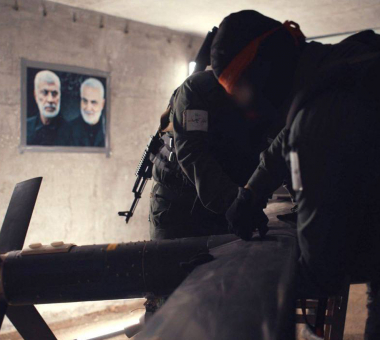
The issue of restricting arms in Iraq is witnessing local, regional, and international developments. The prime minister of the newly formed government has adopted rhetoric suggesting that this issue is moving from the level of political discourse and calls for action to the implementation stage, after setting the end of September 2026 as the final deadline for ending the phenomenon of armed factions and uncontrolled weapons. This is the same date set for the conclusion of the mission of the Global Coalition against Daesh.
Nevertheless, the process of restricting arms is surrounded by doubts at multiple levels, particularly given the differing positions of the factions. Some factions have expressed relative and ostensible acceptance, while others have categorically refused to surrender their weapons, and still others have pursued an ambiguous and evasive approach.
Accordingly, the next step appears complex, and is tied to fragile balances among U.S. pressures linking the future of cooperation with Iraq to achieving tangible results on this issue amid U.S.–Iranian military escalation; the cautious position of the religious authority, apart from some calls for action and without issuing a binding fatwa; and armed factions that differ in their approaches and loyalties.
This raises the prospect of several repercussions, including the possibility of an internal armed confrontation or limited clashes between factions opposed to disarmament and the security and military forces. It could also affect the cohesion and even the survival of the government, whether due to the scale of U.S. and regional pressures on it or the political and security influence wielded by the factions, which enables them to bring down the government.
The Content of Al-Zaidi’s Discourse and His Implementation Plan
The discourse of Iraqi Prime Minister Ali al-Zaidi is based on Article 9 of the Iraqi Constitution, which stipulates the “state’s monopoly on bearing arms,” as well as Popular Mobilization Forces Law No. 40, which contains an explicit provision requiring PMF members to sever their ties with all political and partisan frameworks. His discourse conveys several key messages: confining arms to state institutions, linking the restoration of sovereignty to the restriction of arms, and setting a timeframe that coincides with the end of the international coalition’s mission.
The most important shift in his discourse is that it moves the issue toward a time-bound and procedural commitment, as he is betting that the U.S. military withdrawal from Iraq will eliminate the armed factions’ justifications for retaining their weapons. Nevertheless, ambiguity surrounds the implementation level, particularly regarding the mechanisms for collecting weapons, the absence of an announced plan for the fate of the hundreds of thousands of members of these factions, the approach the government will adopt toward factions that categorically refuse to surrender their weapons, and the means of disentangling the overlap among official institutions such as the Popular Mobilization Forces, Iran-aligned armed factions, and the Revolutionary Guard .
In addition, the government lacks an accurate estimate of the volume of uncontrolled weapons outside the state’s authority. Iraqi security reports indicate that there are approximately 15 million weapons outside state control, including around 200,000 heavy weapons, such as rocket launchers and mortars. By contrast, the actual number of weapons circulating outside official control may be significantly higher, with some estimates suggesting that it could exceed 25 million.
In addition, al-Zaidi faces challenges in fulfilling his commitments and meeting his implementation deadlines for restricting arms, as the armed factions are not merely military formations, but rather forces that wield political and security influence within Iraqi state institutions, have a presence within the security and military establishments, and also possess economic capabilities that enable them to influence Iraq’s economic landscape.
On the other hand, while al-Zaidi appears to be dealing with the phenomenon of armed factions in general terms, this does not mean that they are identical, despite the institutional affiliation of most of them with the Popular Mobilization Forces (PMF). There are multiple centers of decision-making, and Iran and the Revolutionary Guard, through the Quds Force, wield extensive influence within some of these factions. While some affirm their commitment to the decisions of the PMF and the directives of chief of the General Staff of the Armed Forces, others are bound by a “bay'ah” (religious pledge of allegiance) to the late Iranian Supreme Leader Ali Khamenei, a pledge that was subsequently transferred to the third Supreme Leader, Mojtaba Khamenei. More than 40 factions operating within the PMF formations are estimated to be bound by this bay‘ah.
Diverging Positions of the Factions on Restricting Arms and Their Motives
The call to restrict arms to the state has produced a divergence in positions among the armed factions. While some have expressed initial acceptance and readiness to surrender their weapons, most notably Saraya al-Salam led by Muqtada al-Sadr, Asa'ib Ahl al-Haq led by Qais al-Khazali, and Kata'ib al-Imam Ali led by Shibl al-Zaydi, other factions have categorically rejected such a move, particularly the more hardline, transnational factions classified as part of Iran’s so-called “Axis of Resistance.” These include Saraya Awliya al-Dam, Ashab al-Kahf, Kata'ib Karbala, Kata'ib Hezbollah, Harakat al-Nujaba, and Kata'ib Sayyid ul-Shuhada.
In the same context, the factions’ motives regarding the surrender of their weapons vary. On the one hand, the factions willing to surrender their weapons appear to be more integrated into state institutions and, consequently, more inclined to strengthen their political and security influence within the state system.
On the other hand, while armed factions within the “Axis of Resistance” link the surrender of their weapons to a complete U.S. withdrawal, regional and field developments could undermine the government’s bet on the synchronization of these two tracks. The armed factions view al-Zaidi’s discourse as a response made under U.S. pressure in return for Baghdad receiving a multifaceted package of support, which provides these factions with further justification and motivation to retain their weapons and refuse to relinquish them.
Clear indications of this position have come from leaders of some influential factions in Iraq, such as Abu Alaa al-Wala'i, Secretary-General of Kata'ib Sayyid al-Shuhada in Iraq, who stated in a video statement specifically addressing the issue of restricting arms that the factions’ weapons constitute a “trust and a duty” to defend sovereignty, while expressing his rejection of any external pressure aimed at disarming them.
In the same context, the security concerns of these factions are no longer confined to the presence of U.S. forces on Iraqi territory, but extend to broader transnational strategic dimensions, particularly the trajectories of escalation and negotiation between Washington and Tehran. At a time when these factions are assuming a growing role in cross-border confrontation, this role is being further reinforced and deepened, particularly amid the constraints that neutralize and isolate Lebanese Hezbollah from active involvement in the “Unification of the arenas” strategy.
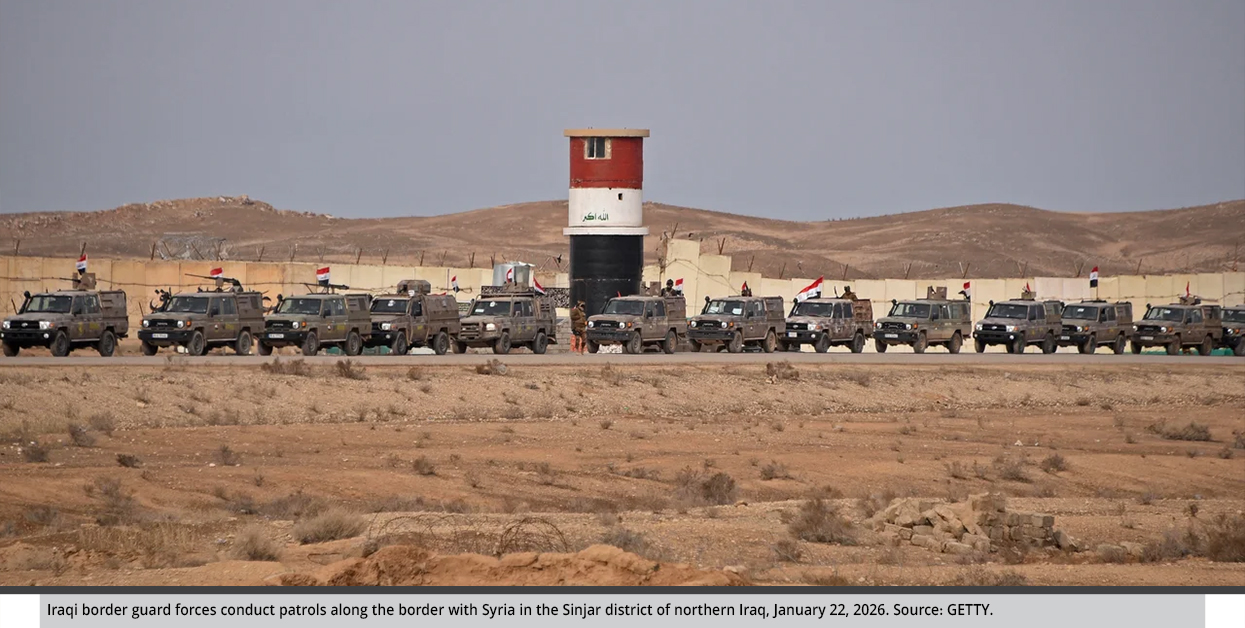
In addition, the political change in Syria after December 2024 has introduced mutual security concerns, particularly with Hayat Tahrir al-Sham’s rise to power and its historical roots, as its origins can be traced to the Al-Nusra Front, which was linked to ISIS—the organization that most Iraqi factions were originally established to fight. On the ground, the Syrian-Iraqi border has witnessed recurring and increasing tensions, most recently the Syrian government’s army announcement on August 4, 2026, that it had raised its level of readiness along the border with Iraq. These concerns are further heightened by recurring reports and statements regarding the possibility of Syrian forces becoming involved in direct military confrontations with Hezbollah in the Lebanese arena.
Challenges and Threats Facing the Restriction of Arms
The process of restricting arms in Iraq faces a range of fundamental and complex challenges. With regard to the factions willing to surrender their weapons, the government may find itself compelled to engage in complex negotiations to reach political settlements in exchange for their weapons. This course runs counter to a U.S. “veto” opposing the participation of any armed factions in government, regardless of whether they declare that they have disarmed. Moreover, the demands of some factions, such as Saraya al-Salam, may go beyond traditional political quotas to include deeper conditions related to the structure of the political system itself, the electoral law, and the balance of power within the political landscape.
This gives rise to further challenges, as the existing crisis of confidence between the factions and the government could deepen, while the government’s bilateral negotiations with each faction separately could be interpreted as an attempt to isolate or target other parties. The process could develop into a crisis given the zero-sum nature of Iraqi political relations, whereby any expansion in the influence or political role of a particular faction is viewed as coming at the expense of other parties, particularly given the limited number of shares and positions available within the executive branch.
By contrast, the level of complexity increases when it comes to factions that refuse to surrender their weapons, as the government lacks effective tools of pressure or incentives to persuade them to do so, particularly since they have no declared political representation within the state’s legislative and executive institutions. More importantly, these factions are affiliated with the “Axis of Resistance,” meaning that addressing their case is not so much a domestic matter as it is part of highly intertwined regional and international dynamics.
Accordingly, the options available to the government for dealing with the armed factions within the “Axis of Resistance” appear extremely limited and are almost confined to the military and security option. However, this raises the possibility of clashes between the factions that refuse to disarm and the army and the Counter Terrorism Service. This possibility is further reinforced by a number of indicators, including:
1- The government may resort to enforcing its decision through armed force, particularly amid growing U.S. and regional pressure, or if the armed factions seek to preempt developments and escalate the situation on the ground in order to destabilize the country and bring down the government.
2- Tehran—as the most influential actor—may find a strategic interest in keeping the issue of arms a source of tension and potentially escalation, using it as leverage in its ongoing negotiations with Washington and as a supporting tool during periods of escalation, while also seeking to safeguard its vital influence in Iraq and prevent its decline.
3- The factions refusing to surrender their weapons appear to be pursuing an escalatory course against U.S. and regional interests. This comes within the context of the broader U.S.–Iranian confrontation and as part of their use as a means of pressure on the Iraqi government, with the aim of demonstrating their ability to shape domestic developments and engage in regional dynamics. For example, in August 2026, the so-called “Islamic Resistance in Iraq” issued a statement giving the government a deadline to respond to joint Saudi-U.S. retaliatory airstrikes against Iran-aligned armed factions, which were carried out in response to the latter’s attacks targeting Saudi facilities and U.S. interests.
4- Maintaining a state of continuous pressure to undermine the government’s image both domestically and internationally. For example, in early August 2026, Jordan and other Arab states informed the Iraqi authorities that they would respond militarily if their territories were subjected to any attack originating from Iraq.
Even if some of these factions move toward surrendering their weapons, this complex and challenging process does not guarantee tangible results. Integrating members of armed factions into army units and security services after dismantling their core structures does not necessarily ensure that the integrated members will abandon their deep ideological loyalty to the Iranian Supreme Leader.
Moreover, there is a risk that the factions could resort to merely “Cosmetic” handovers of heavy weapons, such as drones, armored vehicles, and artillery, whose use has declined with the waning of the ground battle against ISIS, while retaining their arsenals of medium-range missiles, drones, reconnaissance systems, and light and medium weapons suited to urban warfare and cross-border attacks. This could be accompanied by the symbolic evacuation of headquarters located within urban centers, while transferring advanced weapons stockpiles to alternative secret storage facilities.
Methods of circumventing the process may not be limited to these measures, but could also extend to redefining the identity of the factions and their combat missions and formally linking them to state institutions without compromising their decision-making autonomy. Alternatively, they could sever their institutional affiliation with the Popular Mobilization Forces while maintaining a “parallel” military structure operating under the umbrella of the “Islamic Resistance” or the “Axis of Resistance.” There is also the possibility that Iran could resort to establishing new clandestine networks and cells on Iraqi territory to carry out attacks against U.S. and regional interests.
Finally, al-Zaidi’s project to restrict arms to the state appears likely to face a fate similar to the attempts and rhetoric of successive governments, whereby it remains largely a political rhetoric without concrete and practical implementation. This prospect is further reinforced by the continuing uncertainty surrounding U.S.–Iranian escalation, the outcome of which is closely linked to the issue of restricting arms.
As long as the Iranian regime remains resilient, active, and influential, the prospect of the factions surrendering their weapons appears remote. Accordingly, the most likely scenario in light of current conditions and developments is that the government will enter a cycle of repeated extensions of the deadline it set for September 2026. Meanwhile, U.S. forces would maintain their presence in Iraq to counter threats posed by these factions, while the latter would maintain their rhetorical narrative of refusing to surrender their weapons as long as a U.S. military presence remains.
STRATEGIECS Team
Policy Analysis Team