 العربية
The Unraveling of the Iranian Project and the Contours of the Arab Alternative
As some of the elements of power underpinning Iranian influence decline, the paper examines the room this shift creates for Arab states to redefine the boundaries of Iranian influence and address its tools and underlying causes, ultimately leading to the establishment of more independent security and economic arrangements.
by Hazem S. AL-Dmour
- Release Date – Sep 22, 2026

The geopolitical situation in the region is experiencing a clear state of uncertainty; nevertheless, we must recognize that the struggle over filling the geopolitical vacuum is the main driver of all events; the powers are exerting every effort to assert their presence. They do not accept inadequate or incomplete settlements. Rather, they want a clearer picture for the medium term; in terms of security at chokepoints, military clashes, the role and arms of non-state actors, and many issues of common interest between the countries of the region and the relevant global powers.
Over the past three decades, Iran has accumulated extensive influence in the Arab region, taking various forms, including weapons, money, political parties, sectarian ties, and media and service institutions. Since the outbreak of the Iranian Revolution in 1979, Tehran has used multiple tools to influence and reach Arab audiences and public opinion, exploiting a mix of ideology, doctrine, and concepts such as "supporting the oppressed" and "exporting the revolution". It has one objective: building Iranian influence that transcends geographical borders, gives Tehran the ability to manage its conflicts away from its own territory, and enables it to exert pressure and deterrence from within Arab societies. Through the Arab states that, until 2026, have alone borne the consequences of the Iranian project, the Iranian narrative and its political discourse, which claims to support the Palestinian cause and opposes the United States and Israel, have had a broad impact among Arab societies, particularly among Shiite minorities, which, under Iran’s influence, have relatively transformed from communities seeking national integration into separate identities and independent entities, as seen in countries such as Iraq, Lebanon, Yemen, and formerly Syria.
However, the Iranian discourse did not stop at the boundaries of Shiite minorities; it also intersected with other narratives and ideologies, including Islamist, nationalist, and leftist ones, as well as "extremist Islamist movements" such as al-Qaeda, which viewed Tehran as a presumed model for what Arab positions toward both Israel and the United States should be. The former is seen as occupying Arab territories in the West Bank and parts of Syria and Lebanon, and as having expanded this after the war on October 7, 2023. The latter has forces deployed across the region and has an extensive record of supporting Israel and fomenting conflicts in the region, particularly in the context of its war on terrorism, during which it overthrew the former Iraqi regime in 2003.
In addition, these movements find in Tehran an embodiment of their "resistance" discourse, as it demonstrates deterrence against adversaries that surpass it in size in the balance of power, and continues to develop its defensive and offensive systems, including drones and ballistic missiles, despite the economic sanctions imposed on it. Through this approach, Iran was able to leverage fundamental issues that have a strong presence in the Arab mind and consciousness to increase its effectiveness and activity on sensitive issues; it used this emotional effect of these issues as a cover for advancing its regional project and gaining exceptional influence over the key institutions of several Arab states.
On the other hand, the developments that followed the outbreak of the war in the Gaza Strip demonstrated the high level of risks posed by the Iranian project, which do not stop at the presence of that influence in a number of Arab countries, but extend to its repercussions for stability across the region. The first thing the war revealed was the limits of the "Unification of the Arenas" strategy, as the various parties of the "Axis of Resistance" became involved in rounds of escalation and conflict in accordance with Iranian calculations and interests, thereby overriding the major divergences in the local and national circumstances, interests, and considerations of those parties.
This interconnectedness in crisis management constitutes the first practical application of what has become established in the political literature as the so-called "Axis of Resistance", as expressed by former Hezbollah Secretary-General Hassan Nasrallah in his speech marking the 40th anniversary of the Iranian Revolution in February 2019, when he clearly affirmed that the future of the region is linked to the system of "the Guardianship of the Islamic Jurist".
The repercussions of the war also highlighted the grave danger of making decisions of war and peace outside the constitutional and institutional frameworks of the nation-state, as the attacks by armed groups dragged their countries into the war without the slightest consideration for national interests and priorities. More dangerously, these developments revealed that the Iranian project does not only oppose traditional adversaries such as the United States and Israel; the threat posed by Iran and its proxies has also extended to Arab states and their strategic and vital resources, despite their neutrality in the context of the joint U.S.-Israeli war against Iran and their support for the negotiating framework between Washington and Tehran.
Nevertheless, the war produced important shifts; the Iranian narrative significantly declined, and Tehran’s capabilities and its network of regional proxies were notably undermined. This is a strategic shift that gives Arab states vital room for proactive action in light of this changing reality, particularly with regard to realistically redefining the limits of Iranian power and influence, taking the initiative to dismantle its tools and forms of influence, and addressing its underlying causes and factors. This would ultimately contribute to enhancing comprehensive stability and formulating more independent Arab security and economic arrangements.
The Structure of the Iranian Project: Dimensions and Functions
The Iranian project consists of several layers, each of which performs a specific and distinct function, but together they constitute an integrated and comprehensive strategy. Armed groups represent the most prominent and influential layer in this system, given their central role in consolidating Iranian influence in key countries such as Lebanon, Iraq, Yemen, and formerly Syria, in addition to their use as a strategic deterrence tool in the regional conflict with the United States and Israel. Over time, these groups have gone beyond their traditional military functions, becoming deeply integrated into their local societies and taking on advanced institutional forms characterized by organizational structures, media arms, and active political participation that gives them influence in political and security decision-making centers. In the Yemeni case specifically, the Houthis established, following their overthrow of the internationally recognized government, a parallel entity in northern and western Yemen, with their area of control encompassing between 70% and 80% of the total population; equivalent to approximately 20 to 25 million people out of Yemen’s total population of approximately 32 million.
However, despite these groups performing diverse and extensive functions, their ability to exert ideological influence beyond their own environment remains limited. This is where the roles of Iranian media influence come in, through media outlets such as Al-Alam TV, which has been owned by the "Islamic Republic of Iran Broadcasting" since 2003, alongside extensive investment in social media platforms, where a more flexible layer operates that includes websites, pages, accounts, and virtual personas that often conceal their origins or sources of funding. In the last quarter of 2024, Google’s Threat Analysis Group announced the termination of channels and the blocking of domains linked to coordinated influence operations associated with Iran. Some of their content was in Arabic and addressed Palestine, Israel, the U.S. military presence, and political and social issues from multiple perspectives.
In addition, there is a third layer operating within social, religious, and service institutions and business networks, thereby constituting Iranian soft power rather than focusing solely on military aspects. This layer is considered the deepest and most sustainable in engineering its influence and exporting its ideology and revolutionary concepts. Within this layer, a vast, specialized, and interconnected institutional network operates to implement a religious and social agenda in the region and beyond, including educational and dawah institutions such as Al-Mustafa International University and the network of hawzat (Shiite religious seminaries) in Iran and abroad, which attract students and disseminate the teachings of sectarian jurisprudence and the discourse associated with the theory of "Guardianship of the Islamic Jurist". Alongside these are humanitarian and service entities such as the "Imam Khomeini Relief Foundation", which has offices in Lebanon, Iraq, and formerly Syria and operates in the Gaza Strip, as well as charitable institutions affiliated with holy shrines, which provide extensive social and relief services in different countries and environments.
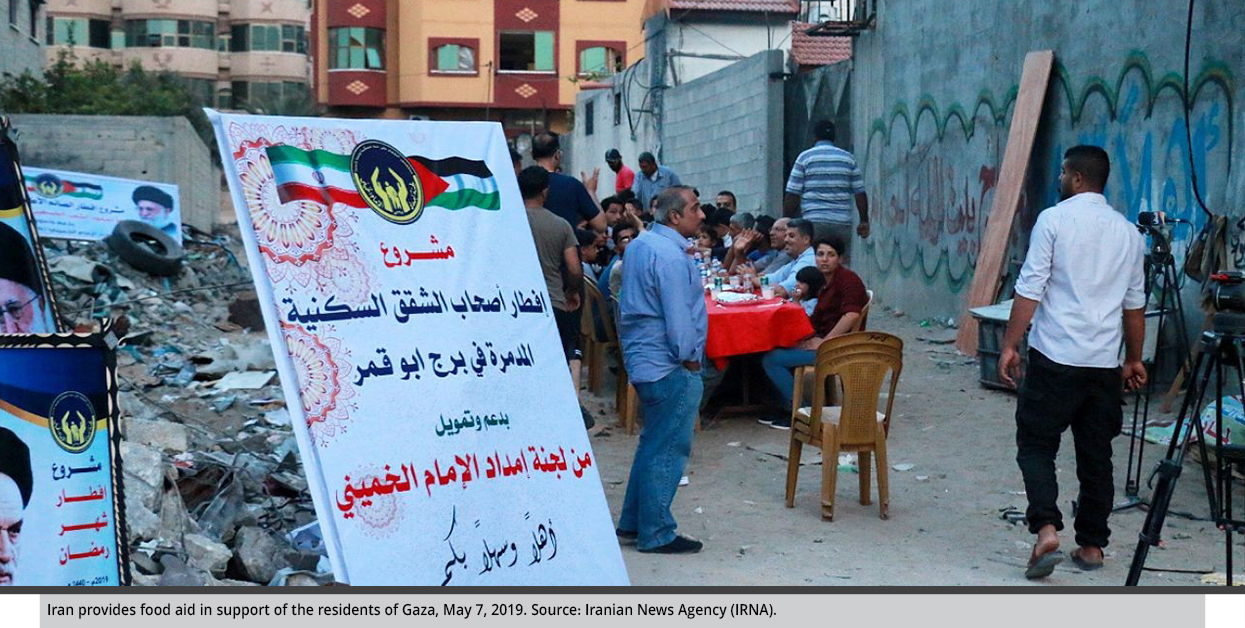
In fact, the interconnectedness among these layers creates a complex reality in the tracks of undermining Iranian influence, as service activities give rise to a system in which people depend on these networks for their daily livelihoods, which gradually transforms into strong political and security loyalties. This process produces a parallel societal structure in which organizations monopolize vital functions to meet needs, shape public awareness, and provide protection for their members. Accordingly, any approach that relies solely on disarming Iran’s proxies will remain incomplete unless it is accompanied by a plan to restore national sovereignty and immediately revive the state’s efficiency and service functions.
Can the Current State of the Iranian Project Be Assessed?
Iran and the structure of its project have suffered extensive damage since the outbreak of the war in the Gaza Strip and its subsequent developments. The Palestinian armed factions in the Gaza Strip, particularly the Islamic Jihad and Hamas movements, have been subjected to strikes that have severely undermined their military capabilities and complicated Hamas’s ability to continue administering the Gaza Strip, particularly within the boundaries of the Yellow Line, where Israel controls an area estimated at around 70% of the Strip’s territory. In Lebanon, Israeli strikes against the leadership structure of "Hezbollah" led to the killing of its Secretary-General Hassan Nasrallah and his potential successor, Hashem Safieddine, alongside the chiefs of staff and commanders of the party’s three units (Badr, Nasr, and Aziz), as well as a number of commanders responsible for missiles, drones, and intelligence. Sources also indicate that the party lost approximately 60% of its arsenal of precision-guided missiles, which constituted the backbone of its strength and its primary deterrence tool against Israel.
The war also undermined the "Unification of the Arenas" strategy, as it severed supply routes between the parties, thereby curbing their ability to escalate simultaneously and in a coordinated manner, despite the varying degrees of damage from one arena to another, and each arena being preoccupied with the military or economic pressures imposed upon it. Perhaps the most significant change in the context of the "Unification of the Arenas" was Iran’s loss of the Syrian territory, which constituted the most important link in the land corridor that Tehran had sought for decades to establish. This corridor extends from Tehran through Baghdad and Damascus to Beirut, and through it Tehran provided logistical support and supplies to Hezbollah in Lebanon, which currently complicates Iran’s ability to support the group’s recovery from the repercussions of the war. In addition, the financial and commercial assets of Hezbollah’s network in Venezuela have been targeted over the past four years.
Nevertheless, the repercussions of the war extended into the "strategic depth" of the "Axis of Resistance" and the "Unification of the Arenas", as Iran was subjected to direct military strikes by Israel in June 2025, in an escalation round that ended with the United States launching military strikes against its main nuclear facilities in Natanz, Fordow, and Isfahan on June 22, 2025. Iran then faced joint U.S.-Israeli strikes again in late February 2026, which eliminated its most prominent leaders, foremost among them Supreme Leader Ali Khamenei and Ali Larijani, the most prominent figure in Iran’s decision-making process and Secretary of the Supreme National Security Council, who was killed on March 17, 2026, in addition to the assassinations of a number of senior commanders of the Revolutionary Guard.
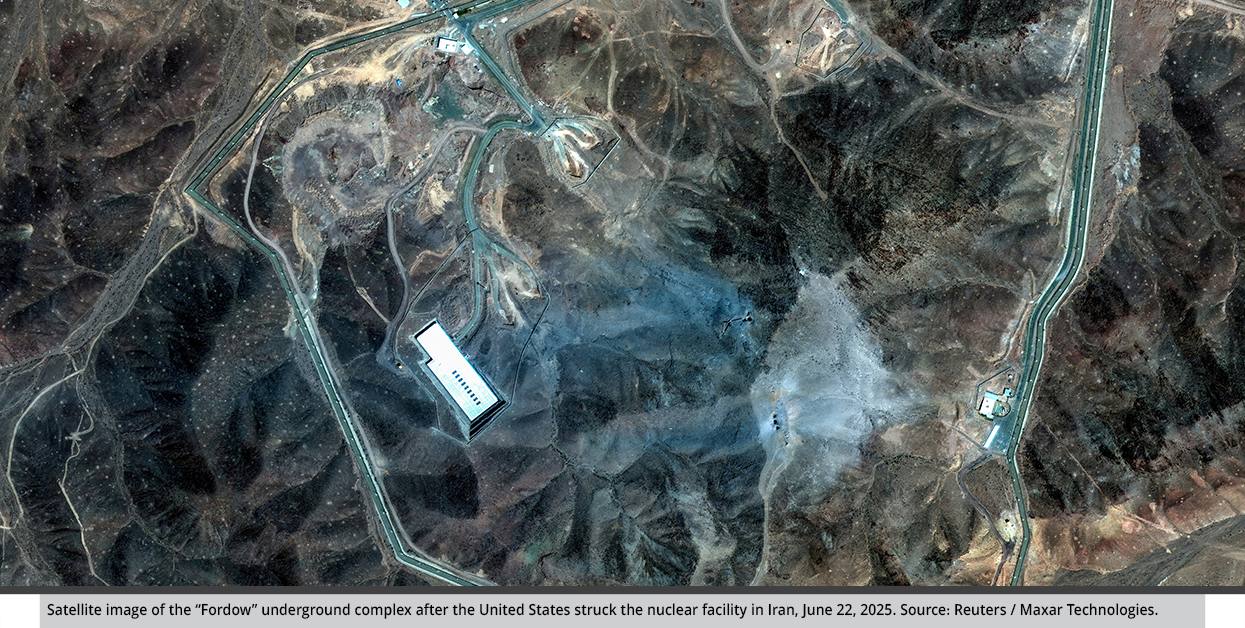
Months into the war, Iran is facing mounting economic sanctions that are placing pressure on Iranian society and threatening to undermine the regime’s ability to maintain its efficiency and control. Amid this, Iran has shifted from relying on the "Unification of the Arenas" strategy to a strategy of "pressure through the two straits", having pushed the Houthis, currently its strongest proxy, to escalate against the international recognized government and reach the Bab al-Mandab Strait in mid-September 2026. This has shifted the pressure onto the countries of the world as a whole, as it intensifies its efforts to tighten its control over the world’s most important maritime chokepoints in order to further complicate and disrupt global supply chains. Consequently, direct and indirect pressure is being transferred to economies in the region and around the world.
The Exposure of the Iranian Project: Structural Fragility and the Illusion of Power
Despite the broad scope of influence built by the Iranian project, recent developments on the ground have demonstrated that this seemingly extensive presence has been subject to extensive media amplification; when put to the test, it failed to translate into real or tangible military power, neither at the level of the Iranian state itself nor through its network of regional proxies. Since the outbreak of the war, its project has suffered successive losses, and Tehran’s strategic position has declined from the equation of "deterrence" to the "ability to inflict harm on the other". While deterrence was based on both national and hybrid power instruments, Tehran has come to act outside the frameworks of international law and the norms of good-neighborly relations, targeting even neutral and mediating states. At its core, such conduct reflects a state of exposure, mounting pressure, and rogue-state behavior. To compensate for this structural and military deficiency, the Iranian influence apparatus has intensified its campaigns and systematic narratives directed at Arab populations, in an attempt to turn public opinion against strategic partnerships and mutual defense agreements with the United States and Western countries.
However, this extensive media campaign failed to create a popular base of support beyond limited environments or ideological currents that align with Tehran. The figures reflect the stark discrepancy between the presumed scale of influence and popular acceptance of it. The 2025 Arab Barometer surveys showed that at least 6 out of every 10 respondents in the majority of countries covered consider Iranian political influence a direct threat, while concern over Iran’s nuclear program exceeded 70% in important countries such as Jordan, Egypt, and Syria. These findings are consistent with the 2025 Arab Opinion Index, which indicated that 53% of respondents view Iranian policies as a threat to the security and stability of the Arab region. In an indicator of the extent of rejection even within areas of direct control and influence, Gallup poll data showed highly pronounced negative attitudes toward the Iranian leadership, with the disapproval rate reaching 86% in Iraq, including 83% among Shiites specifically, 80% in Yemen, and 73% in Lebanon. These indicators reveal that, regardless of the extent of its tools of penetration and media amplification, the Iranian project lacks popular legitimacy and regional acceptance, reflecting a structural crisis in converting coercive control into sustainable soft power.
Against the backdrop of the opinion polls, we find another highly significant picture, represented by the enormous costs of the war at the humanitarian levels. In the Gaza Strip, the number of displaced people has reached approximately 2.15 million Palestinians living under catastrophic humanitarian conditions, including more than 800,000 displaced people residing in dilapidated tents unfit for human habitation. In Lebanon, the Ministry of Social Affairs documented the displacement of more than 1.1 million people, amid the near-total collapse of infrastructure and vital sectors. In addition to the fact that some of these figures reflect Israel’s violating of humanitarian standards in the war, they reveal Iran’s persistent pursuit of sacrificing the Arab individual in service of its strategic interests and regional ambitions. Even in areas less affected by the war, such as Yemen, government estimates indicate that food insecurity has reached approximately 60% of the total population, while poverty rates in Houthi-controlled areas range between 80% and 90%.
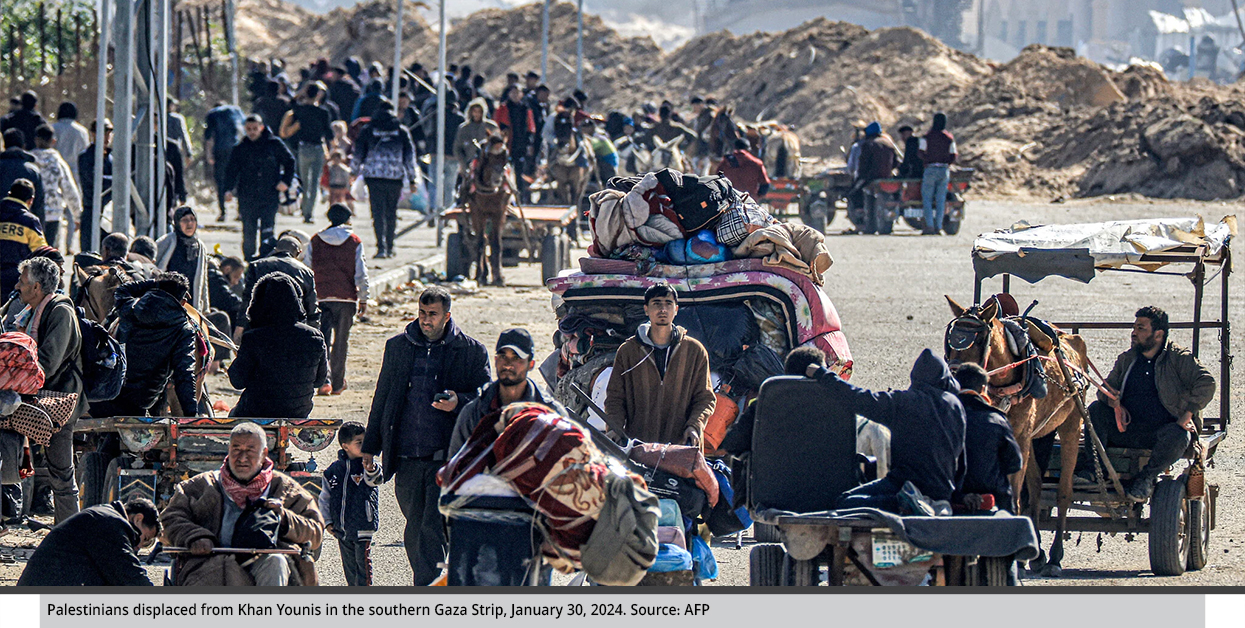
The scale of the Iranian predicament does not stop at the regional repercussions of the war; rather, it has extended to affect Iran’s domestic sphere itself. These catastrophic outcomes have revived the voices of the opposition and those critical of its foreign policy, while the regime continues to marginalize domestic development and welfare issues in favor of cross-border adventures. In the face of this mounting structural inability to provide a genuine development model or address pressing livelihood crises, Tehran has sought to compensate for its shortcomings by targeting successful models and attempting to contain them regionally, particularly in the Arab Gulf states. This approach is reflected in systematic efforts to undermine their vital resources and capabilities and tighten the noose around their economic security by creating disruptions in international corridors and straits, targeting oil transport vessels, and launching direct acts of sabotage against refineries, oil fields, and strategic and vital infrastructure.
Pillars of Strategic Confrontation and Arab Alternatives
After years of monitoring the nature and state of Iranian influence in Arab countries, confronting this influence inevitably requires three fundamental pillars: restoring the sovereign functions of Arab states subject to Iranian influence, building a transparent media space to counter disinformation networks, and adopting an effective Arab policy toward the Palestinian cause.
On the one hand, confronting Iranian influence requires helping other Arab states move forward with their efforts to restrict weapons and place decisions of war and peace solely in the hands of the state and its constitutional institutions. Iraq and Lebanon have each taken their first steps toward this goal, despite the complexities surrounding both cases. However, security measures must be accompanied by genuine and institutional support for the governments of fragile states, enabling them to fulfill their service and development responsibilities. This can be achieved through a strategic approach based on partnerships and mutually beneficial investments for the various parties involved, with investments directed toward vital projects and infrastructure, thereby ensuring the provision of employment opportunities and services to citizens independently of any social or factional intermediaries. When the process of restricting weapons is coupled with achieving justice, enforcing the law, and improving living standards, this closes the gaps that Iran exploited in the context of leveraging local communities’ need for protection or justice.
On the other hand, response efforts should focus on strengthening Arab public opinion by developing an advanced Arab media system that adheres to the highest standards of governance and transparency regarding funding and institutional ownership. Its task should be to dismantle systematic influence strategies and targeted digital disinformation. This requires building strong, professional investigative journalism and enhancing digital media literacy to enable citizens to identify suspicious sources and detect inauthentic behaviors. It also requires putting an end to sympathy toward Iran and its conduct among Islamist political currents whose agendas align with Iran.
This should be complemented by another track: formulating an effective and clear Arab policy toward the Palestinian cause, measured by tangible actions such as transparent relief efforts, diplomatic pressure, and adherence to international law and UN resolutions, in order to prevent the exploitation of this just cause by the many who seek to profit from it, foremost among them Iran, its axis, and Islamist political currents across the spectrum of their extremism.
Finally, no security strategy, regardless of how precise it is, can achieve its objectives in isolation from the provision of a genuine and comprehensive Arab development alternative. Protecting countries and safeguarding societies against the penetration of regional projects can be achieved sustainably by strengthening economic, defense, and technological integration among Arab countries, localizing knowledge, and transferring successful development models that demonstrate their ability to manage resources and achieve human well-being.
Hazem S. AL-Dmour
General Manager / Specialized Researcher in International Relations and Strategic Studies