 العربية

Scenarios for the Resumption of U.S.-Israeli Military Operations Against Iran
Several scenarios are being considered for a potential U.S.-Iran confrontation amid stalled negotiations, escalating mutual military and economic pressure, and diverging political calculations over the resumption of military operations. The paper examines Iran's domestic challenges, Washington's and Tel Aviv's calculations, and the prospects of a transition to an open military confrontation or the continuation of a state of "no war no peace."
by STRATEGIECS Team
- Release Date – Nov 5, 2026
The U.S.-Iranian confrontation is heading towards a phase of strategic uncertainty, amid stalled negotiations and the continued state of "no war no peace," alongside mounting mutual military and economic pressure. While U.S. and Israeli moves reflect preparedness for the possibility of resuming military operations, Tehran faces domestic challenges and disagreements over whether to prioritize negotiations or escalation. Meanwhile, calculations within the U.S. administration and Israel differ regarding the costs, timing, and objectives of returning to confrontation. In light of this, several potential scenarios emerge for the course of the confrontation, ranging from the resumption of military operations to the continuation of parallel pressures without sliding into an open war.
Intensive Diplomatic Activity and Uncertain Outcomes
Since October 30, Qatar has entered the mediation process by conducting intensive contacts with Washington and Tehran, followed by meetings with Iran's negotiating delegation in Doha, which lasted for three days before its departure on November 2. These negotiations revolve around three interconnected issues: the United States' demand for the restoration of freedom of navigation in the Strait of Hormuz, the implementation of which Tehran links to the fulfillment of its conditions, alongside Washington's insistence that Iran make nuclear concessions before negotiations resume. The Iranian conditions are based on what is known as the "Seven-Day Plan," which Tehran presented last September. Its provisions center on ending the U.S. naval blockade, lifting economic sanctions, releasing frozen assets, and ending the war, while deferring complex issues, foremost among them the nuclear file, to later stages of negotiations in exchange for reopening the Strait.
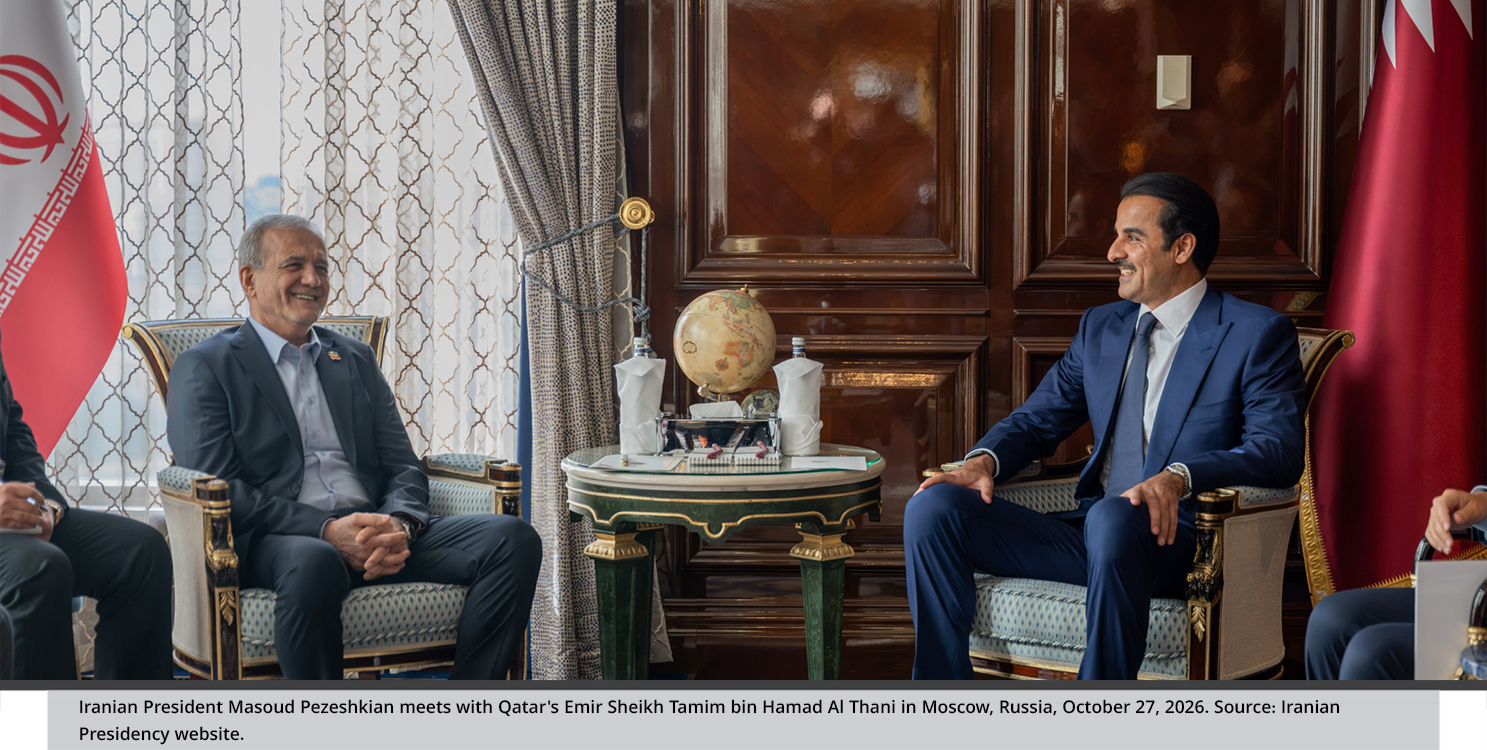
This runs counter to the U.S. negotiating approach based on "step-for-step," whereby the implementation of Iranian conditions will not proceed without an agreement on a reciprocal timeline that establishes Tehran's corresponding commitments. Washington also insists that any agreement, whether permanent or temporary, must include a firm Iranian commitment not to rebuild its nuclear program. Similarly, each round of negotiations has received attention from both parties and regional support for ending the war. On November 2, U.S. President Donald Trump stated in an interview with Israel's Channel 12 that he had not made a final decision on launching military action against Iran, at a time when diplomatic efforts are ongoing. On the other hand, Iran's Supreme Leader, Mojtaba Khamenei, granted the government the powers and options to hold peace talks and negotiations. On November 2, Iranian President Masoud Pezeshkian stated, in remarks reported by the official news agency IRNA, that Tehran is seeking to resolve the crisis through dialogue.
However, despite these intensive diplomatic efforts surrounding the U.S.-Iranian negotiations, the talks remain at square one, as the two parties are seeking to reach an understanding on general principles and arrangements without the negotiations moving to the nuclear program or discussions on the terms for ending the war. At best, what is being discussed is an "interim agreement" rather than a comprehensive settlement. Experience has shown that any agreement between the two parties will remain fragile without being backed by developments on the ground or domestic shifts. The two countries had previously signed a "Memorandum of Understanding," which entered into force on June 17, aimed at stopping the war for 60 days, but it lasted only 20 days before Trump announced its abandonment on July 7.
Indicators of the Resumption of Military Operations
Indicators of a potential interim agreement are being met with parallel signs of both parties' readiness to resume escalation, as the United States is significantly increasing its military presence in the region to an unprecedented level. The number of U.S. troops deployed there has reached approximately 50,000, with around 10,000 more expected to be added during November. As of late October, two U.S. carrier strike groups are stationed in the Arabian Sea: the strike group led by the aircraft carrier USS George Washington and the strike group led by the aircraft carrier USS George H.W. Bush. A third group, led by the aircraft carrier USS Theodore Roosevelt, is scheduled to join them. The carrier departed its base in San Diego on September 27, heading for the Middle East. The amphibious group USS Makin Island, carrying the 13th Marine Expeditionary Unit, is also heading to the region, making it the second group of this type, alongside the USS Boxer group, which carries the 11th Marine Expeditionary Unit.
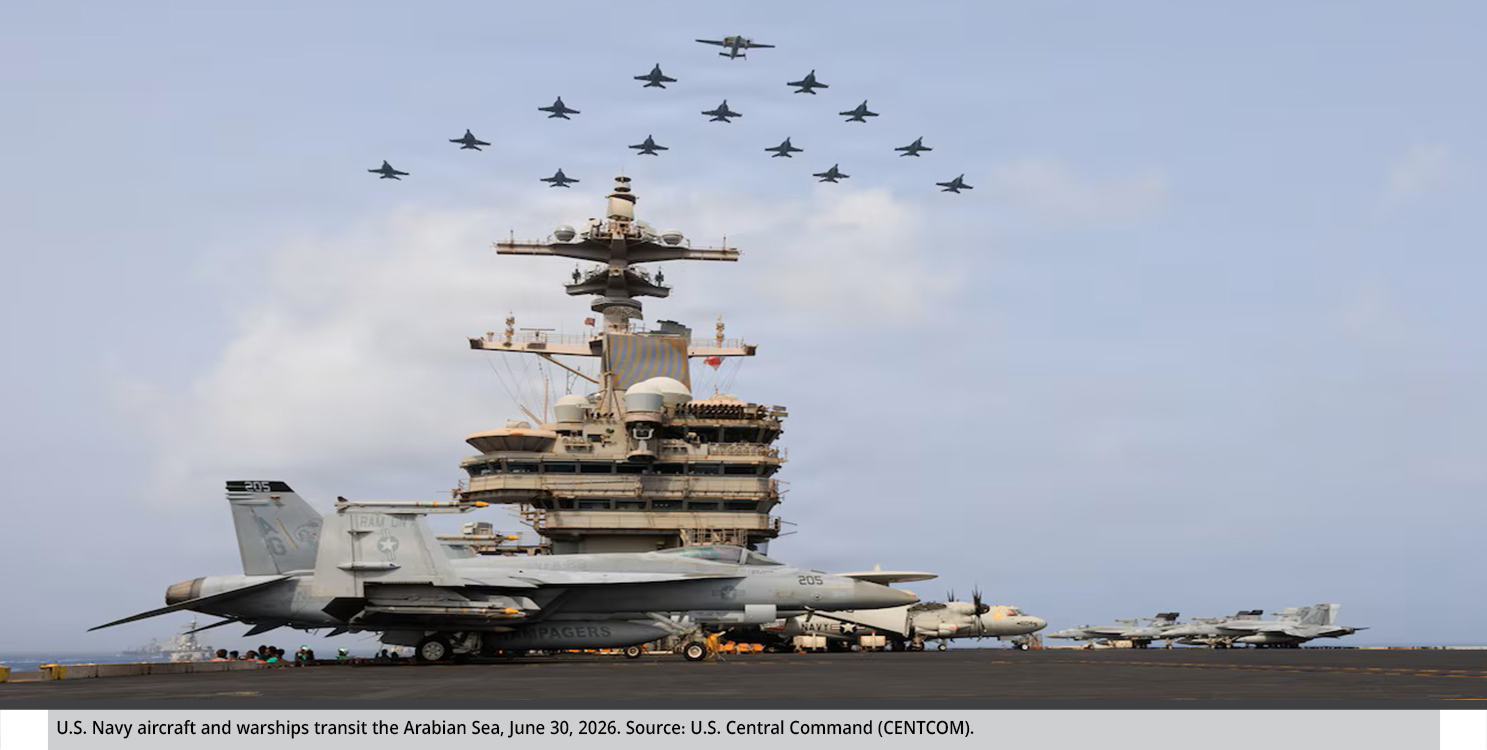
In fact, these extensive reinforcements indicate that the United States is heading towards a resumption of military operations. According to experts, this buildup goes beyond objectives related to applying pressure or maintaining the blockade and reinforces the likelihood of preparations for offensive and defensive operations on the ground. This includes increasing and diversifying firepower capabilities, as well as establishing an additional maritime air and missile defense layer to protect ships and aircraft carriers that were exposed to missile threats during the previous round of escalation. It also aims to distribute interception tasks between naval and land-based systems, thereby reducing reliance on Patriot and THAAD batteries and preserving their interceptor missile stockpiles.
On the other side, Iran's preparations for a resumption of the war appear to outweigh its assessment of the viability of negotiations, particularly in light of previous developments, as the military strikes against it in June 2025 and then February 2026 coincided with an active negotiating process. As a result, Iranian leaders have lost confidence in the negotiating track and may even view it as part of a strategic deception operation aimed at launching a preemptive and surprise strike against Iran.
Recently, the number of statements and reports attributed to Supreme Leader Mojtaba Khamenei has increased. In late October, he met with senior military officials, and according to a statement issued by his office, the Supreme Leader instructed that any attack will be met with a response without geographical restrictions. On November 4, the Supreme Leader's statement appeared more pessimistic, indicating that Iran would make no concessions to the United States and warning that any new round of attacks or escalation against Iran would lead to a much broader war across the Middle East. In this context, threats issued by the Revolutionary Guard and military commanders indicate that the next confrontation will not be confined to West Asia and may extend into the Indian Ocean.
Domestic Developments and Complex Priorities
The U.S. administration is witnessing internal divisions over whether to prioritize war, negotiations, or continued reliance on pressure tools. While the U.S. president appears closer to the option of resuming the war, the Vance-Rubio camp favors giving negotiations strategic priority and avoiding engagement in a new round of military operations. Although the midterm election results do not directly affect Trump's constitutional powers to resume the war, they have clearly exposed the political and economic costs of continuing the confrontation and the extent of public opposition to its repercussions. At the same time, the elections revealed clear differences in the assessments of members of the U.S. administration. While Trump rejected the notion that the war against Iran was a major reason for the electoral defeat and affirmed that he would make the same decision again, Vance blamed the war for the Republicans' losses, considering the decision to end it the right course of action.
On the other hand, the continuation of the state of "no war no peace" imposes an increasing economic cost on Iran due to ongoing pressure, isolation, and uncertainty. However, it also postpones more complex domestic issues that may emerge once the war ends, relating to the nature of the relationship between the state and society, the legitimacy of the third Supreme Leader, the boundaries of the relationship between the executive branch and the military establishment, as well as a review of the outcomes of Iran's foreign policy over the past decades, which prioritized influence and regional expansion at the expense of economic interests and domestic development requirements.
In this context, the significance of the path that will bring the state of “no war no peace” to an end is not limited to determining the future of the confrontation with the United States, but extends to reshaping the balance of power within the Iranian regime. A negotiated settlement may strengthen the position of the executive branch and forces advocating the containment of escalation and prioritizing economic recovery, at the expense of the influence of the military establishment and the Revolutionary Guard. Conversely, ending the confrontation through military victory or continued escalation may strengthen the role of the military establishment in governing the state, but entails high economic, security, and political costs and may exacerbate the domestic challenges facing the regime.
From this standpoint, calculations within Tehran differ regarding whether to prioritize negotiations or prepare for a new round of escalation. The continuation of these differences without resolution reflects the absence of a clear position from the Supreme Leader and raises questions about his ability to unify decision-making centers and impose a clear strategic direction. This deprives the country of a defined negotiating strategy, affecting the powers of the negotiating delegation and leaving it with limited capacity to make decisions or act in accordance with clear objectives and an agreed-upon strategy.
Scenarios for War and Negotiations Between Washington and Tehran
Amid uncertainty, declining prospects of reaching an agreement, and growing domestic complexities associated with resuming the war, three main scenarios emerge as follows:
Scenario One: Resumption of Military Operations
In addition to the military indicators supporting this scenario and the declining prospects for successful negotiations, the situation on the ground raises questions about how the state of "no war no peace" could come to an end, given that it imposes heavy costs on the countries of the region and both parties to the war, while maintaining a state of offensive and defensive readiness and the associated ongoing attrition. At the same time, breaking this cycle of stalemate appears impossible without changes on the ground and in the balance of power, or significant domestic shifts that push one of the parties to retreat, either through Washington ending the war or Tehran making concessions. In the absence of such decisive changes, moving towards war appears to be an inevitable option that neither party can avoid. The U.S. military reinforcements indicate that Washington is seeking to expand its naval and amphibious presence, compared with the buildup that accompanied the military operations in February 2026. This means that Washington may be planning operations that would alter the balance of power and the situation on the ground in its favor by providing additional offensive options in the form of missile strikes and limited ground operations by the U.S. Army.
Scenario Two: Success of the Doha Negotiations
This scenario appears unlikely, given the extreme complexity of the issues under negotiation and the wide and longstanding gap between the two parties. Nevertheless, Democratic control of the U.S. Congress presents a second option for the U.S. administration. On the one hand, the president appears to have the authority to wage war, but these powers are limited to a period of no more than 90 days without congressional approval. On the other hand, these results could reinforce the priority of "America First" within the U.S. administration and focus attention on the upcoming presidential elections, rather than risk a prolonged and extended war with Iran. At the same time, Israel is witnessing parallel political developments. Similar to the Republicans' loss of their majority in both chambers of the U.S. Congress, Netanyahu's chances of returning to form a government have declined, while the prospects of a government with a different political makeup have strengthened, led by new actors under the leadership of Gadi Eisenkot, whom the main opposition forces have agreed to support in forming the government. Nevertheless, even if the Doha negotiations succeed, they are unlikely to lead to a sustainable process or guaranteed outcomes. At best, they may produce an interim agreement or a framework of principles, which would return the situation to the first scenario.
Scenario Three: Reliance on Parallel Pressures and Continuation of the State of "No War No Peace"
This scenario involves the United States and Iran avoiding a direct return to military confrontation, while simultaneously failing to reach an interim agreement that would end the state of "no war no peace." Instead, they would intensify the use of mutual pressure tools, keeping the possibility of a resumption of war alive and using these measures to improve their negotiating terms. On Washington's part, this could take the form of maintaining the naval blockade, tightening economic sanctions, strengthening its military presence in the region, and employing diplomatic pressure to increase Tehran's isolation. In response, Iran may resort to leveraging its regional cards, continuing threats to navigation in the Strait of Hormuz, and expanding the scope of security and economic pressure on U.S. interests and its allies. Nevertheless, this path is linked to the time factor. While it reduces immediate costs, it increases the costs and risks of long-term attrition and offers no guarantees of containing the confrontation or preventing pressure from turning into a wider military engagement as a result of miscalculation or either party's attempt to break the cycle of stalemate. This points to an unsustainable situation that may return the situation to the first scenario.

STRATEGIECS Team
Policy Analysis Team