 العربية
Iraq Between Geopolitical Challenges and Strategic Opportunities
Recent developments in Iraq indicate that the country stands on the threshold of a profound geopolitical and economic transformation. The recent elections are seen as a pivotal moment for reshaping regional power balances. With its vast oil and gas resources and its strategic location linking the Gulf to Turkey and Europe, Iraq is gradually becoming an arena for geo-economic competition among Iran, Turkey, and the Gulf–U.S. axis, as well as Western powers. While global actors race to invest in ports, corridors, and energy projects, Iraq’s future remains contingent on its ability to harness this competition to build stability and sustainable development.
by Dr. Cyril Widdershoven and Hazem S. Aldmour
- Release Date – Dec 23, 2025
On 11 November 2025, Iraq held its parliamentary elections, the results of which saw the Reconstruction and Development Coalition, led by Prime Minister Mohammed Shia’ Al-Sudani, take the lead with 46 seats. These elections came amid a delicate phase in Iraq’s domestic political landscape and within a regional context marked by shifting power balances and evolving security calculations—factors that have direct implications for the Iraqi scene.
The decline of Iran’s influence and that of its regional axis has opened space for the rise of new regional projects and alliances, most notably the Gulf–American alliance, which leverages geo-economic dimensions to shape geopolitical outcomes. Within this timing and these dynamics, the Iraqi parliamentary elections cannot be viewed merely as a constitutional entitlement; rather, their results are central to defining Iraq’s future trajectory and its position within an emerging regional order.
Election Results: A Turning Point
Although the election results may appear ordinary from the perspective of most democratic countries, Iraq’s current situation represents a decisive turning point and a clear rupture with its past. The results achieved by Al-Sudani’s electoral coalition should be viewed as a high-level political engineering effort.
What strengthens Al-Sudani’s current prospects is that he enjoys good relations with Iran, is regarded by Turkey as a pragmatic leader, and is trusted by the Gulf states to a greater extent than his predecessors. Most importantly, if he returns as prime minister, the West is likely to view him as the first Iraqi leader since 2005 capable of making decisions without anxiously looking over his shoulder at Iran’s allies in Iraq. This is significant, as Al-Sudani’s bid for a second term does not rely on force, but on balance. Although he does not openly express optimism about a second term, his legitimacy stems from his nearly impossible ability to position himself as a candidate acceptable to all sides.
However, despite his coalition’s lead in the election results, Al-Sudani did not secure enough seats to form a government on his own. The Coordination Framework forces maintained their weight within parliament and declared themselves the largest parliamentary bloc after the parties within the alliance succeeded in increasing their seat share compared to the 2021 elections. The State of Law Coalition won 29 seats, Al-Sadiqoun Bloc affiliated with Asa’ib Ahl al-Haq secured 27 seats, the Badr Organization won 21 seats, and the representation of the National State Forces Alliance rose to 18 seats, after having won only four seats in the previous election.
Despite this, it once again appears that the parliamentary elections have not produced a state of clarity or stability—an indication that Iraq is heading into a new phase of political polarization, whether in the process of forming the government or in selecting the Speaker of Parliament and the President of the Republic. Yet, a fundamental difference stands out in the current landscape compared to previous periods: the accelerating regional transformation.
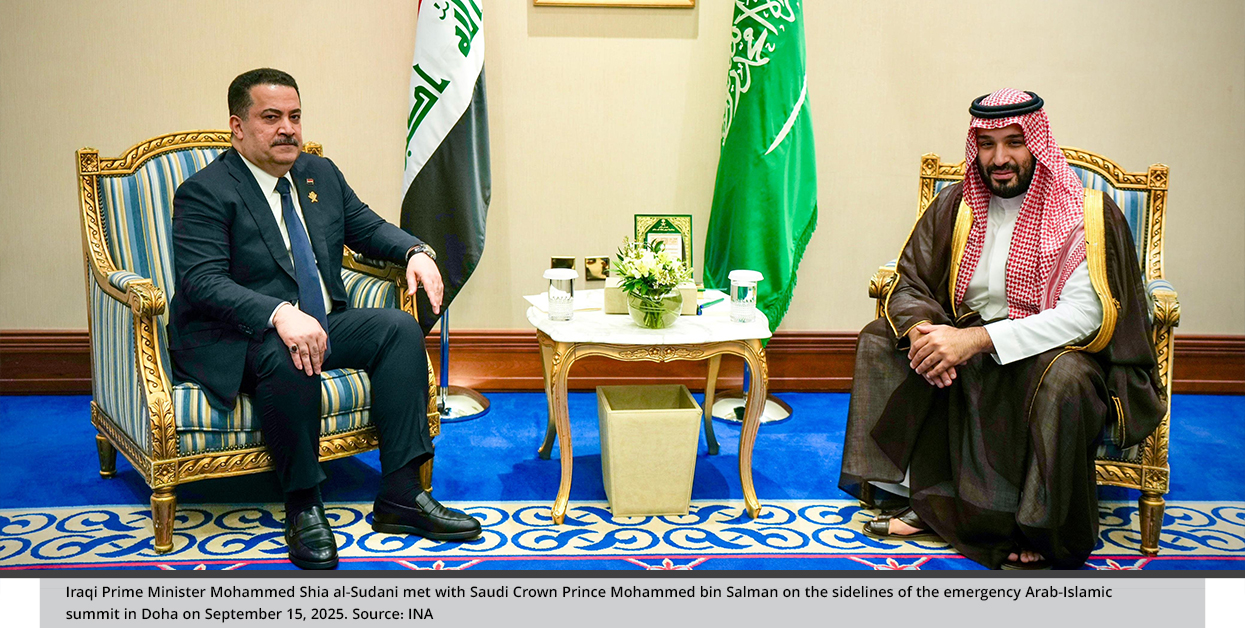
The "Resistance Axis,” backed by Iran—and in which certain Iraqi factions play an active role—has seen its influence decline. In contrast, the Gulf axis has been rising steadily, deepening its partnership with the United States and expanding their cooperation, particularly under the administration of President Donald Trump. This shift was embodied in Trump’s Gulf tour to Saudi Arabia, Qatar, and the UAE in May 2025, followed by Saudi Crown Prince Mohammed bin Salman’s visit to the United States and his meetings with Trump.
These engagements resulted in agreements spanning fields that go beyond security and politics, extending into economic and strategic domains with direct implications for regional dynamics.
In contrast to the Iranian axis—which has historically relied on ideological, identity-based, and sovereignty-driven considerations—the Gulf–American axis focuses on geo-economic approaches, foremost among them issues of energy and investment. This orientation places Iraq in a pivotal position due to its strategic attributes: from its largely undeveloped oil reserves to its natural gas resources that could reduce its dependence on imported Iranian gas, and finally to its geographic location, which grants it a strategic advantage in regional infrastructure projects.
Iraq’s ports and overland routes have the potential to reshape trade pathways in the Middle East, thereby enhancing Iraq’s significance in the calculations of emerging regional powers.
While Iraq’s internal political discourse and regional positioning have long posed enduring challenges, a new geopolitical variable has entered the scene: the repercussions of the war in the Gaza Strip, which have weakened Iranian influence and undermined the foundations of its expansionist policy in the region. Although the Gulf–American partnership is not a departure from its historical framework, the trajectory it is currently taking carries significant implications.
This partnership seeks to expand areas of cooperation and regional integration in the fields of energy and investment across the Middle East, while simultaneously reinforcing policies aimed at containing Iran. Moreover, this rising axis is unlikely to remain confined to Gulf states alone; it may extend northward—an expansion that intersects directly with Iraq, given its strategic location and vital resources. As a result, Iraq is poised to be among the countries most directly affected by the rise of this axis in the near term.
Traditional Axes: A Coming Shift
Iran views the results of the Iraqi parliamentary elections positively. Its officials welcomed both the holding of the elections and their outcomes. Even before the official results were announced, the Iranian ambassador to Iraq stated that his country “respects whatever outcome emerges.” In reality, Tehran seeks to promote its relationship with Iraq as that of an ally rather than a subordinate, so long as Iraq remains politically and economically dependent on it. For this reason, Iran has tied its influence in Iraq to a combination of political patronage, support for its proxies, and Iraq’s reliance on Iran for energy. From Tehran’s perspective, Iraq’s dependence on Iranian-supplied electricity networks and gas pipelines is more valuable than ideological alignment.
Although Al-Sudani has demonstrated a clear degree of independence, his steps have been characterized by pragmatism and caution. While he promised reforms and outlined their scope explicitly, he did not seek confrontation. Tehran also sees Baghdad’s engagement with Gulf states and its openness to Western countries as limited, despite Iraq’s quiet pursuit of a strategic repositioning at the regional level. On this basis, Iran can accept any Iraqi leadership capable of maintaining balance without fully aligning with the Gulf states or the West at Iran’s expense—at least for now. However, there are indications that change may be on the horizon.
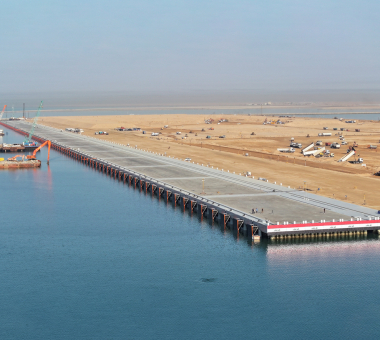
On the other hand, Iran is attempting to obstruct Iraq’s efforts to achieve independence in the gas sector. The utilization of associated gas and the cessation of gas flaring, the development of the Akkas and Mansouriya fields, and the establishment of a national gas network capable of supplying Iraq’s power generation plants all represent clear steps toward diminishing one of Iran’s most effective instruments of influence. Given the current regional moment, in which discussions about curbing Iranian influence have intensified, any acceleration by Iraq in advancing its gas file would be perceived by Tehran as a strategic threat.
By contrast, Turkey views Iraq from an entirely different perspective than Iran. While Iran pursues a strategy based on the “isolation” of Iraq, Turkey seeks its “integration.” Turkish influence in northern Iraq does not rest on militias or ideology, but rather on infrastructure, construction companies, security arrangements, and trade. Ankara has also established a quasi-permanent military presence aimed at keeping the Kurdistan Workers’ Party (PKK) under constant pressure.
The Turkish–Iraqi Development Road Project—a massive corridor linking Basra to the Turkish border—constitutes the cornerstone of Ankara’s geo-economic strategy. Turkey does not view this corridor merely as an economic project, but as an integrated network designed to shape the Iraqi economy and bind it to Turkey’s logistical and industrial systems.
The same logic applies to Iraqi gas fields. Decisions regarding the development of reserves in the Akkas, Mansouriya, and Khor Mor fields are not solely related to the management of Iraq’s national assets; they are also an extension of Turkey’s ambitions to become a regional gas trading hub. Such ambitions would strengthen Ankara’s ability to balance Russian, Azerbaijani, and Eastern Mediterranean gas supplies, into which Iraqi gas would eventually be integrated. Clearly, Turkey’s strategy in this domain conflicts with Iran’s, and Iraq will need to manage this emerging rivalry between the two states with caution.
In addition to its competition with Iran, Turkey has been closely monitoring recent developments in Gulf–American relations. Turkish officials now recognize that they may face competition from a new axis in northern Iraq, as the rise of the Gulf–American axis could complicate Turkey’s plans and ambitions regarding overland and maritime corridors. At the same time, large-scale inflows of Gulf capital could redirect infrastructure projects toward southern Iraq, posing a challenge to Ankara by weakening Turkey’s monopoly over Iraqi trade routes.
Accordingly, the coming phase is expected to witness an accelerated push to implement Turkish projects in Iraq, alongside efforts by Ankara to further entrench its military presence in the north. Turkey looks to pursue all of this within a bilateral framework with Baghdad, thereby limiting Iraq’s ability to maneuver.
The Expanding Role of the Gulf–American Axis
While Iran and Turkey have traditionally represented the primary axes of influence in Iraq, the contours of a new rising axis are now taking shape. Over the past decade, the Gulf states—particularly Saudi Arabia and the United Arab Emirates—did not display a clear strategy toward Iraq, oscillating between ignoring it and fearing its loss to Iran. However, this situation is changing rapidly. Based on assessments within the Arab world, Iraq is no longer viewed merely as a buffer zone, but also as a forward frontier, which has transformed Gulf investments into a tool for achieving stability along the northern belt of the Arab world and for reducing Iranian influence.
With significant opportunities available in petrochemicals, energy, agricultural supply chains, and logistics corridors, Gulf states are no longer seeking to eliminate Iranian influence in Iraq, but rather to regulate and reduce it through economic tools and capital flows.
Like others, Al-Sudani has represented a suitable partner for the Gulf states, as he has adopted a delicate balance in welcoming Gulf investments without undermining Iran’s core interests. He has also demonstrated seriousness in his relations with Saudi Arabia and the UAE that goes beyond performative frameworks or symbolic policies. Gulf sovereign wealth funds, in turn, have viewed him as an ideal partner, as officials from these funds have valued the protection of their projects and the assurance that they would not be harmed within his pursuit of achieving economic and political gains over a short period of time.
If Riyadh and Abu Dhabi continue their broad investment drive in the sectors of ports, power stations, petrochemical projects, and industrial zones, the coming decade will witness massive changes in the investment landscape—what may be described as a decade of deeper “economic integration” looming on the horizon.
The Gulf Arab states consider their advanced relations with the United States, along with recent agreements in the fields of investment and economics, to constitute a strong boost to reinforcing their current position. With the region witnessing a U.S. administration closely aligned with Gulf interests in energy and security, this provides political cover for Gulf expansion in Iraq. It can now be said that all parties are playing the same card by entering Iraq under the umbrella of a unified strategic objective: confronting Iran without risking the destabilization of Iraq.
It appears that Arab leaders have now chosen to build economic influence instead of relying on militias, and analysts should begin assessing a potential scenario in which Iraq becomes a silent hub for a Gulf–American strategy based on capital rather than military force.
The list of stakeholders interested in Iraq has expanded further, as European states—long silent—have shown interest in returning to Iraq through cautious steps. Europe is eager to diversify its hydrocarbon sources, and Iraq has emerged as an option to replace Russian gas and oil. Previously, energy security was not a priority for Europe, particularly regarding Iraq, especially in the face of other threats such as ISIS and al-Qaeda. As a result, European oil and gas companies had been cautious in recent years about investing in Iraq, in addition to their frustration with bureaucracy, delayed payments, and security risks.
However, as geopolitical cost–benefit calculations have shifted, European interest in Iraqi energy sources has increased—particularly as Iraq has become more attractive in light of relative stability and under a technocratic government attentive to Western technical standards.
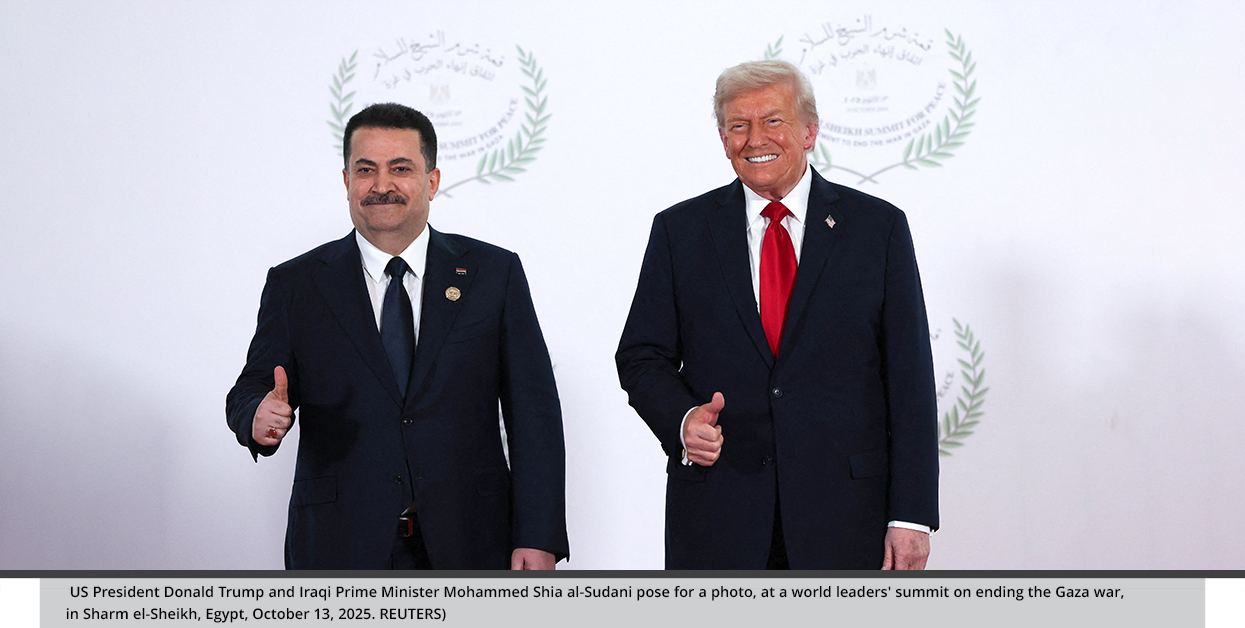
The administration of U.S. President Donald Trump has demonstrated particular interest in Iraq, as the elections provide an opportunity to reorganize and re-engineer Iraq without owning it. While Washington does not wish to engage heavily in the Iraqi arena, it has incentives to ensure that Iraq does not drift deeply into the Chinese orbit or remain under Iranian control. At the same time, Washington is monitoring Turkey’s movements, as it does not wish for Iraq’s third option to be an expanded dependence on Ankara, despite not stating this openly.
Perhaps the most suitable American approach toward Iraq is a return to limited engagement, focused on energy infrastructure, governance, and security cooperation, while doing so at the lowest possible cost. The U.S.–Gulf rapprochement is one of the factors that multiplies America’s strategic interest and importance in Iraq.
Iraq on the Map of Geopolitical and Economic Competition
Each actor has a direct or indirect interest in Iraq’s primary resource and most important asset: its energy sector. While this sector constitutes Iraq’s central point of vulnerability, it also represents its most exceptional opportunity—especially at a time when Baghdad aims to increase crude oil production from 4.6 million barrels to approximately 6 million barrels per day by the early 2030s. This goal remains distant, yet it can be achieved if the Iraqi government is willing to introduce updated contractual terms, ensure stability in the payment of dues, and remove bottlenecks in the infrastructure dedicated to the transportation, storage, and processing of energy products.
Achieving all of this requires Western capital, or Chinese engineering capacity in the absence of Western company involvement, in addition to infrastructure partnerships between Iraq and the Gulf states, as well as political predictability. It must be noted that without the participation of Western and Gulf states, high production capacity will fall into the hands of Russian and Chinese companies, which may be able to increase output but are unable to establish an economically sustainable and future-proof system.
Political stability remains the key factor, and the recent parliamentary elections may provide an opportunity to achieve it. Thereafter, it will be up to the next prime minister to implement the reforms initiated by Al-Sudani—who may return for a second term—and to push them forward through a system designed to preserve them.
Nevertheless, natural gas carries a more political character than oil, as it is the only domain in which Iraq’s internal interests clash directly with external agendas. Iraq’s gas strategy would grant it independence and break its reliance on Iran by reducing imports of Iranian natural gas and electricity. At the same time, advancing natural gas development would curb the financial drain caused by oil-based electricity generation and allow Iraq to enter regional energy diplomacy as a seller rather than a buyer. Many European countries would be highly interested, as this step would place Baghdad at the heart of emerging gas policies linking the Gulf, Turkey, and Europe.
Accordingly, competition over energy continues despite all its negative implications. It can be said that every molecule of Iraqi gas utilized domestically is a molecule no longer purchased from Iran. Conversely, Turkish influence will grow with every kilometer of pipeline connecting it to Iraq. Notably, Gulf financing for Iraqi gas projects will also rebalance regional power dynamics. Should the expected large gas discoveries in Iraq materialize, the country would become a genuine arena of competition, at which point Iraq’s external relations would be truly tested.
In the future, infrastructure—still obscured by the fog of hydrocarbon and energy policy—will play a greater role, with geography serving as the primary determinant. Ports and corridors carrying geopolitical weight comparable to that of energy will reshape regional logistics, particularly following the completion of the Al-Faw Port and progress on the Development Road. Some even suggest that these two projects could disrupt the existing balance between the Suez Canal, Turkish corridors, and Gulf ports.
Within this context, various powers compete for gains and influence: the Gulf states seek a share, Turkey seeks control and influence, China pursues contracts, and the United States seeks to prevent Chinese dominance. In principle, Baghdad wants all of this at once, yet its institutional capacity remains insufficient to absorb it. If Al-Sudani—or any future prime minister—manages to establish a system for managing all oil fields, Iraq would be able to leverage this competition not only to attract capital, but also to improve the infrastructure needed to become a bridge linking Asia and Europe—a long-held national ambition. Otherwise, if Iraq fails to reorganize its system, policies, and project management approach, mismanagement will turn Iraq’s geography into a mere arena of competition.

A New Era on the Horizon
Amid the contours of the new phase unfolding in the region, Iraq must not follow the same dead-end path of the past; time and circumstances are different. The elections have produced a popular orientation that supports achievement and development, and Iraq has tested a model that has been well received by all external parties under Al-Sudani’s government, which has produced a leader acceptable to most Middle Eastern countries and the world in a rare balance the country has seldom experienced. Accordingly, everything depends on Al-Sudani’s return, or on whether he—or any other prime minister—can leverage this moment to create a genuine strategic space. This includes strengthening Iraq’s independence from Iranian gas without provoking Iran, deepening integration with the Gulf states without alarming Turkey, inviting Western investment without empowering armed factions, and maintaining stability. If all these conditions are met, a decade of pragmatic modernization may lie ahead.
However, if Iraq falters, it may once again become the arena in which others settle their disputes. The “Great Game” has returned—a term referring to the rivalry between the Russian Empire and the British Empire in the nineteenth century over Afghanistan and neighboring regions in Central and South Asia—but this time it is not based on ideology or identity. Rather, in a reality that is both compelling and challenging, it is a competition over molecules of energy, trade routes, ports, and infrastructure—sectors that will define the future of the Middle East.
- Hazem Salem Dmour: General Manager / Specialized Researcher in International Relations and Strategic Studies
- Dr. Cyril Widdershoven: Expert and consultant in global energy markets, holding multiple positions in international research centers and global energy companies.
Dr. Cyril Widdershoven and Hazem S. Aldmour
Specialized Senior Researchers